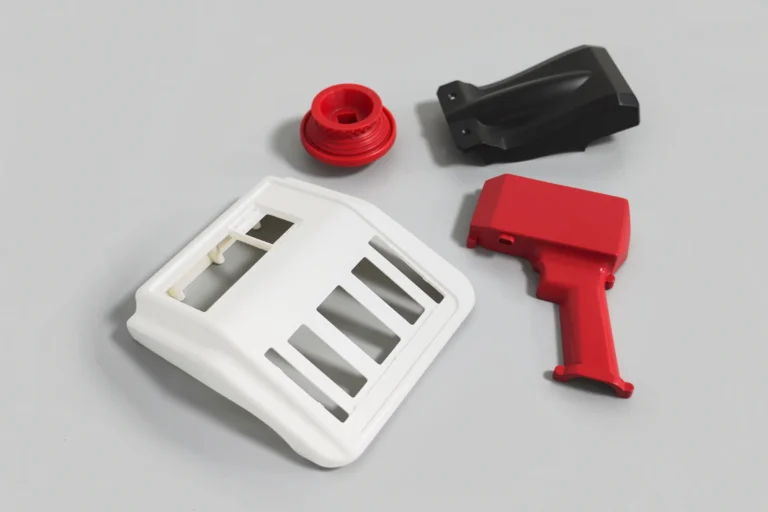
What Is Rapid Prototyping? Process, Types and Benefits
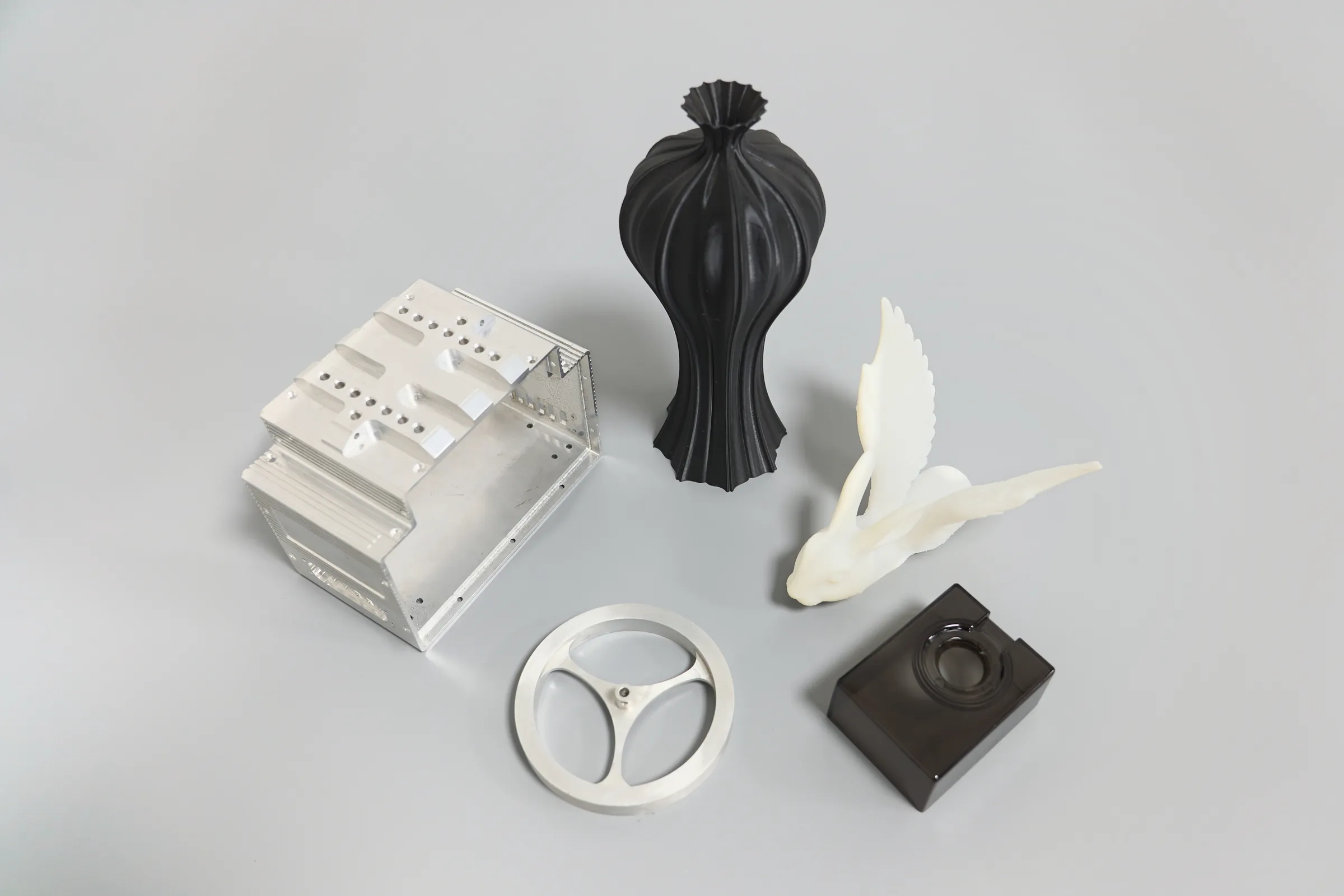
Rapid prototyping is a group of manufacturing methods that turn a 3D CAD design into a physical part quickly, usually in days rather than weeks, so engineers can test form, fit and function before paying for production tooling. The most common methods are 3D printing, CNC machining, vacuum (urethane) casting and rapid tooling for low-volume injection moulding.
This guide explains how rapid prototyping works, the main methods and when to use each one. It is written by the engineering team at KM Rapid, a prototyping factory in Dongguan, China that has made prototypes for product teams since 2015.
What does rapid prototyping mean?
A prototype is an early physical version of a part or product. "Rapid" means the part is made directly from a digital file, without the expensive steel moulds and long setup used in mass production.
The term first described early 3D printing (stereolithography) in the late 1980s. Today it covers any fast, low-volume method that helps a team answer a design question:
- Does it look right? Appearance and ergonomic models.
- Does it fit? Assembly checks with mating parts.
- Does it work? Functional tests with production-like materials.
- Is it ready to launch? Pre-production samples for marketing, certification or user trials.
How does rapid prototyping work?
Most projects follow the same five steps, whatever method is used.
- Design the part in CAD. The engineer exports a 3D file, usually STEP or STL. A 2D drawing is added when tolerances, threads or surface finish matter.
- Design for manufacturing (DFM) review. The supplier checks wall thickness, undercuts, small features and tolerances against the chosen process and suggests changes before anything is made. At KM Rapid a DFM review is included free with every quote.
- Make the part. The file goes to a 3D printer, a CNC machine or, for vacuum casting, to a printed master pattern and a silicone mould.
- Finish and inspect. Support removal, sanding, painting, plating or polishing, then a dimensional check against the drawing.
- Test and iterate. The team tests the prototype, updates the CAD and repeats. Fast iteration is the main reason rapid prototyping exists.
Types of rapid prototyping
| Method | How it works | Best for | Typical quantity |
|---|---|---|---|
| SLA 3D printing | UV laser cures liquid resin layer by layer | Smooth, detailed appearance parts and master patterns | 1–10 |
| SLS / MJF 3D printing | Fuses nylon powder with a laser or heat | Strong functional parts, snap fits, complex internal shapes; MJF suits larger nylon batches | 1–200+ |
| SLM metal 3D printing | Laser melts metal powder | Complex metal parts that cannot be machined | 1–10 |
| FDM 3D printing | Extrudes melted plastic filament | Strong, low-cost functional parts (visible layer lines) | 1–10 |
| CNC machining | Cuts the part from a solid block of metal or plastic | Tight tolerances and real engineering materials | 1–100 |
| Vacuum casting | Pours polyurethane into a silicone mould made from a master | Production-like plastic and rubber-like parts in small batches | 10–200 |
| Low-volume injection moulding | Simple, faster-to-make injection mould | Real injection-moulded parts before full tooling | 500+ |
Quantities are general guidance, not limits. The right choice depends on part size, material and tolerances.
3D printing (additive manufacturing)
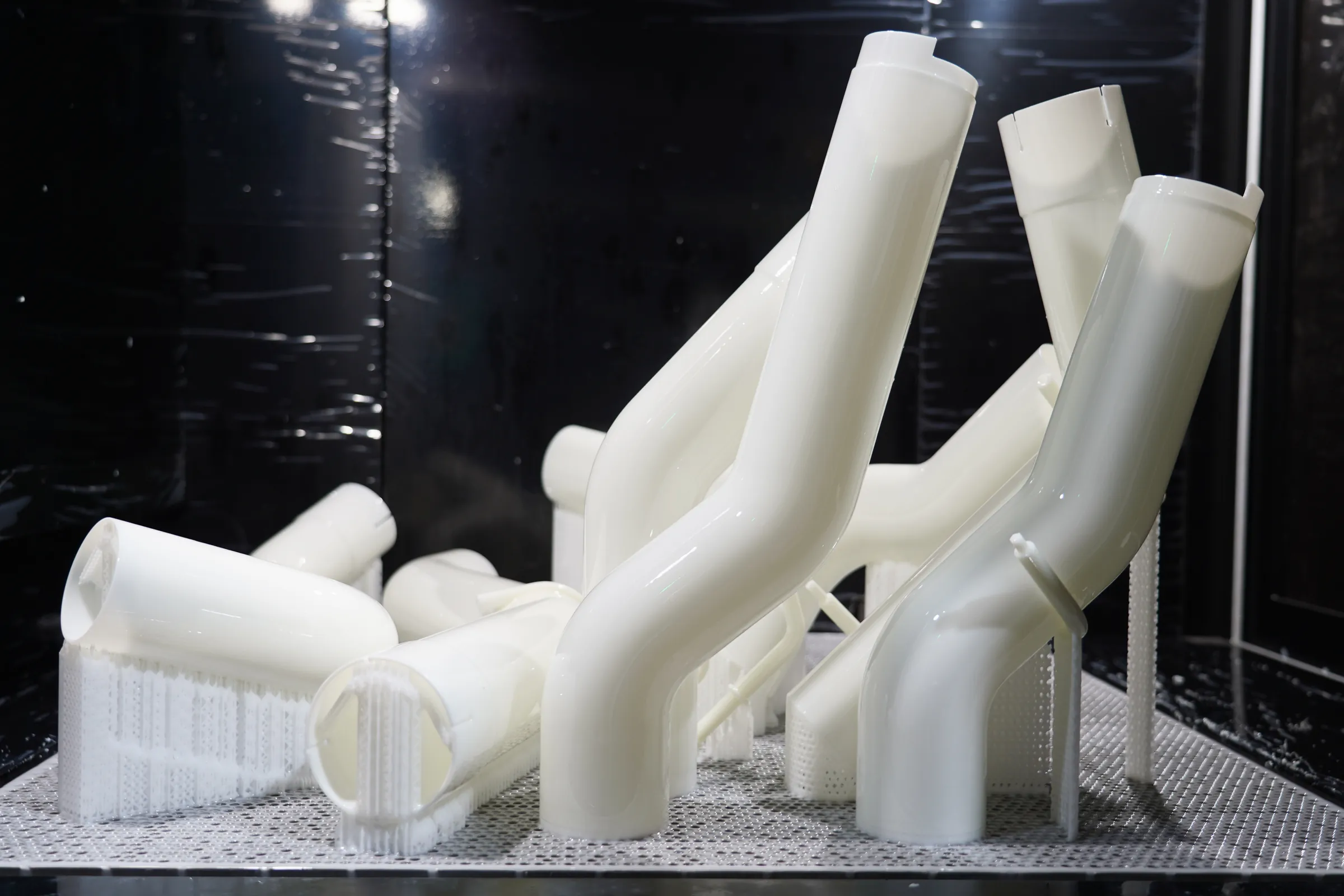
3D printing builds a part layer by layer straight from the CAD file, with no tooling at all. That makes it the fastest way to get a first physical part and the easiest way to make complex shapes.
- SLA gives the smoothest surface and finest detail. It is the usual choice for appearance models and for the master patterns used in vacuum casting.
- SLS and MJF print in nylon, so the parts are tough enough for clips, hinges and functional testing.
- SLM prints metal parts, most commonly aluminium or stainless steel, for complex geometry.
- FDM makes strong, low-cost functional parts. Its visible layer lines make it less suited to appearance models.
KM Rapid runs 200+ industrial 3D printers in-house, mainly SLA and FDM. We also provide SLS, MJF and metal (SLM) 3D printing, with KM Rapid handling the DFM review, quality checks and delivery. See our 3D printing service and SLA printing pages.
CNC machining
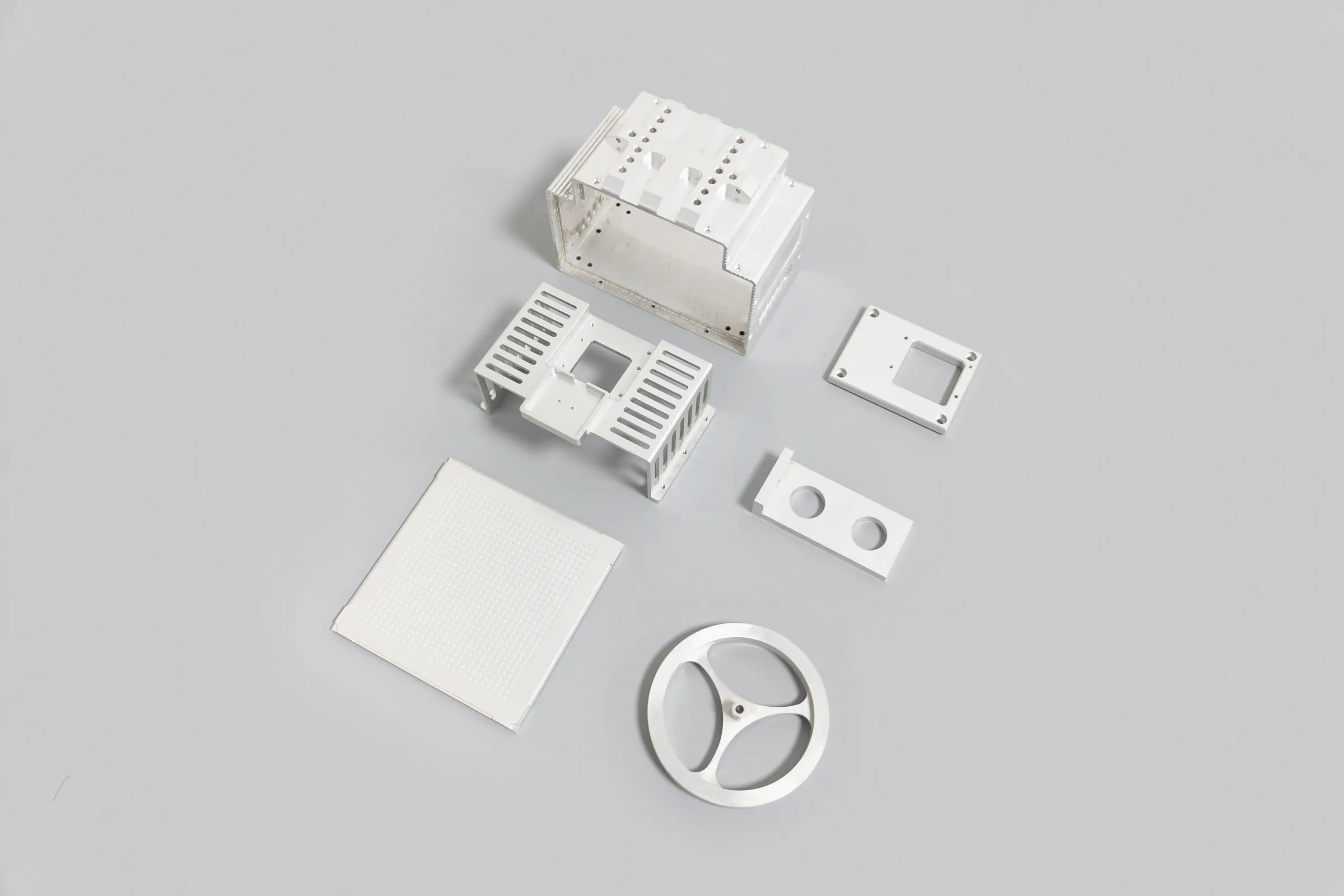
CNC machining removes material from a solid block, so the prototype is made from the same aluminium, steel or engineering plastic as the final part. Choose CNC when you need tight tolerances, real material properties or metal parts that must take load. It is usually slower than printing for complex shapes, but more accurate.
KM Rapid machines standard-tolerance CNC prototypes in its own workshop and also provides high-precision CNC machining. See CNC machining.
Vacuum casting (urethane casting)
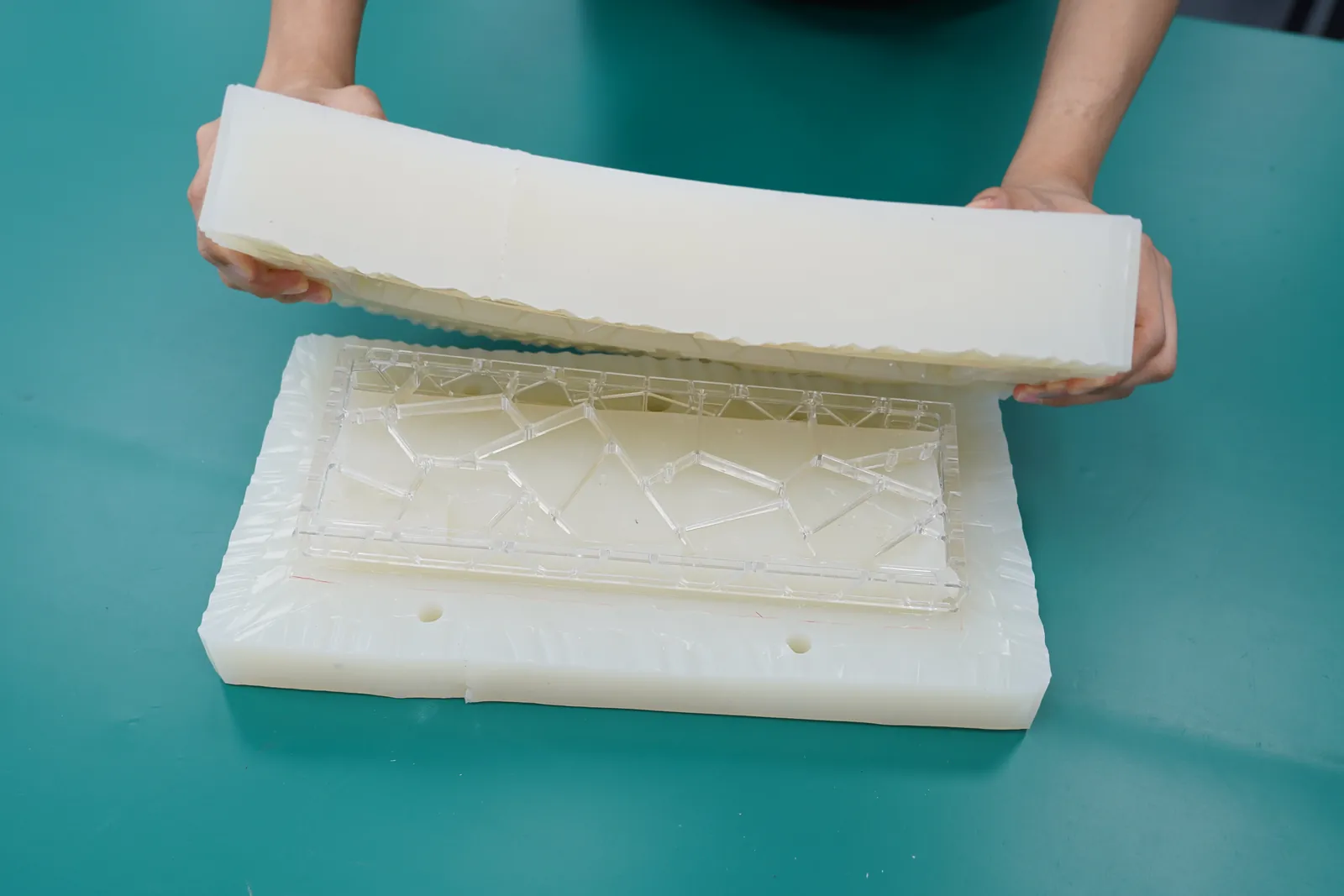
Vacuum casting, also called urethane or polyurethane casting, sits between 3D printing and injection moulding. A master pattern is 3D printed, a silicone mould is made around it, and polyurethane resin is poured into the mould under vacuum to remove air bubbles.
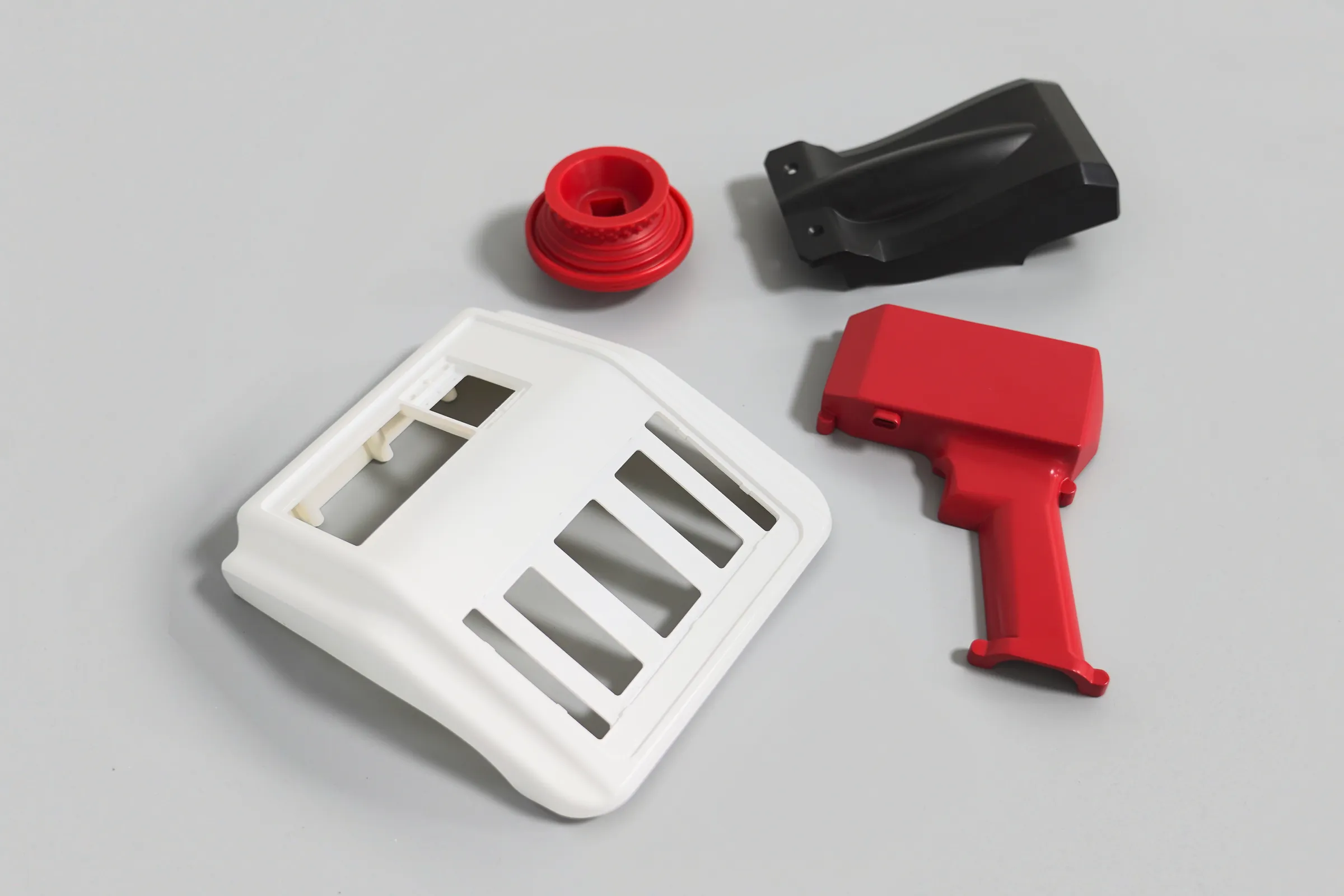
Each silicone mould makes 10–15 parts. The resins can mimic ABS, PP, PA and clear PMMA, or rubber-like materials from Shore 30A to 90A, and the parts can be painted, textured or colour-matched. That makes vacuum casting a strong choice when you need 10 to a few hundred production-like parts for testing, trade shows or a pilot run.
Vacuum cast parts are typically held to ISO 2768-c (coarse) tolerances, for example ±0.8 mm on dimensions between 30 and 120 mm. Note that industrial vacuum casting is different from the vacuum investment casting used for metal jewellery. See vacuum casting.
Rapid tooling and low-volume injection moulding
When a design is close to final and you need hundreds of parts in the real production plastic, a simpler and faster injection mould is the next step. It costs more upfront than vacuum casting but gives true injection-moulded parts. KM Rapid provides injection moulding services. See rapid injection moulding.
Is rapid prototyping the same as 3D printing?
No. 3D printing is one rapid prototyping method, and the one most people think of first. Rapid prototyping is the wider goal: making a test part quickly. Depending on the material, tolerance and quantity you need, the best method may be CNC machining or vacuum casting instead.
Additive manufacturing is the technical name for 3D printing. It is used for prototypes and, increasingly, for end-use production parts.
Benefits of rapid prototyping
- Find design problems early. A fit problem found on a prototype costs a few days. The same problem found after steel tooling can cost weeks and a new mould.
- Faster development. Short build times let a team test several design versions in the time one traditional sample would take.
- Lower upfront cost. Most methods need little or no tooling, so you pay for parts, not moulds.
- Better decisions. Holding a real part helps engineers, managers and customers agree on a design faster than reviewing screens.
- Real testing. CNC parts and vacuum cast parts in production-like materials can go through functional, drop and assembly tests.
- Bridge to production. Vacuum casting and rapid tooling supply parts for pilot runs, certification and early sales before mass production starts.
How to choose a rapid prototyping method
Ask four questions:
- What do you need to learn? Appearance points to SLA or painted vacuum cast parts. Fit and function point to SLS/MJF, CNC or vacuum casting.
- What material does the final part use? If the test depends on real metal or engineering plastic, use CNC. If a similar plastic is enough, 3D printing or vacuum casting work.
- How many parts? 1–10 parts: 3D printing or CNC. Up to about 200 parts: vacuum casting is usually more economical. Above about 500: consider low-volume injection moulding.
- How tight are the tolerances? As a general guide based on ISO 2768: CNC metal parts can meet the fine class (f) and CNC plastic parts the medium class (m), SLA prints the medium class (m), and vacuum cast and sheet metal parts the coarse class (c). For example, on a 30–120 mm dimension that is about ±0.15 mm, ±0.3 mm and ±0.8 mm respectively. Mark critical tolerances on a 2D drawing whichever method you choose.
If you are not sure, send your CAD file and tell us what you want to test. Our engineers will recommend a method in the free DFM review.
What do you need to get a rapid prototyping quote?
- A 3D CAD file (STEP preferred; STL is fine for 3D printing)
- A 2D drawing if you have tolerances, threads or inserts
- Material or required properties (for example clear, rubber-like or flame-retardant)
- Quantity
- Colour and surface finish
- Target delivery date
We are happy to sign an NDA before you share files. Get a quote.
FAQ
What is rapid prototyping in simple words?
It is a fast way to make a physical test part directly from a 3D design file, usually with 3D printing, CNC machining or vacuum casting, so you can check the design before mass production.
What is the most common rapid prototyping method?
3D printing, especially SLA for appearance parts and SLS or MJF for functional nylon parts. CNC machining is the most common choice for metal prototypes.
How long does rapid prototyping take?
It depends on the method, size and finish. 3D printed and CNC prototypes are often ready in days. Vacuum casting adds a few days for the master pattern and silicone mould. Send your CAD file for a lead time on your part.
Is rapid prototyping expensive?
It costs far less upfront than production tooling because most methods need little or no tooling. The price depends on size, material, quantity, tolerances and finish. Send your CAD file for an exact quote.
Can rapid prototyping be used for production?
Yes, for low volumes. Vacuum casting, SLS/MJF printing and rapid tooling are often used for pilot runs and small-batch production before or instead of full injection moulding.
Why is rapid prototyping important?
It lets teams find and fix design problems before they invest in tooling, which saves time and money and leads to better products.
About KM Rapid KM Rapid (Guangdong KuaiMa 3D Technology Co., Ltd.) is a rapid prototyping and low-volume manufacturing company in Dongguan, China, founded in 2015. It operates a 5,000+ m² factory with 200+ industrial 3D printers and an in-house CNC workshop, offers additional manufacturing services, and is certified to ISO 9001.