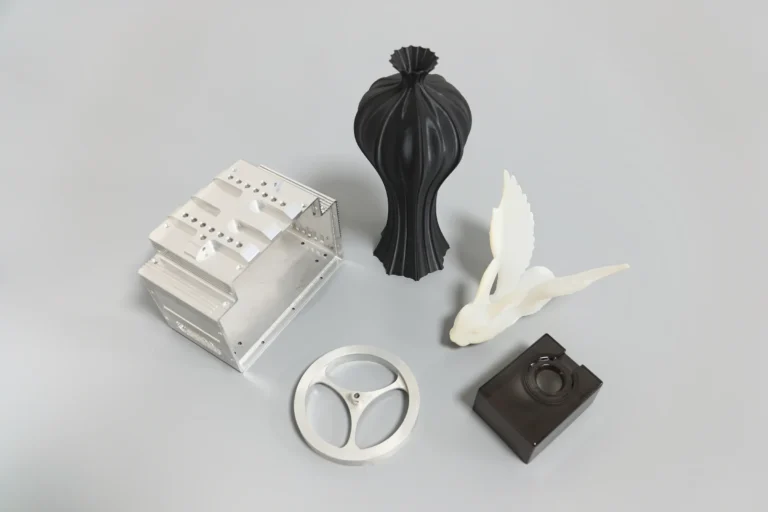
Vacuum Casting (Urethane Casting): The Complete Guide
Vacuum casting is a low-volume manufacturing process that pours liquid polyurethane resin into a silicone mould under vacuum to make production-like plastic parts. The silicone mould is made from a 3D printed master pattern, and each mould can be used about 10–15 times. It bridges the gap between 3D printing and injection moulding, giving you smooth, detailed parts in real engineering-like materials without the cost of steel tooling.
Vacuum casting is also called urethane casting or polyurethane casting. This guide, written by the engineering team at KM Rapid — a vacuum casting and prototyping factory in Dongguan, China — explains how the process works, what materials and tolerances to expect, what it costs, and when to choose it over other methods.
What is vacuum casting?
Vacuum casting is a copying process. Instead of cutting a part from a block (CNC) or building it up layer by layer (3D printing), it reproduces a master pattern many times using a flexible silicone mould and liquid resin. The "vacuum" refers to the vacuum chamber used while pouring, which pulls trapped air out of the resin so it fills every fine detail without bubbles.
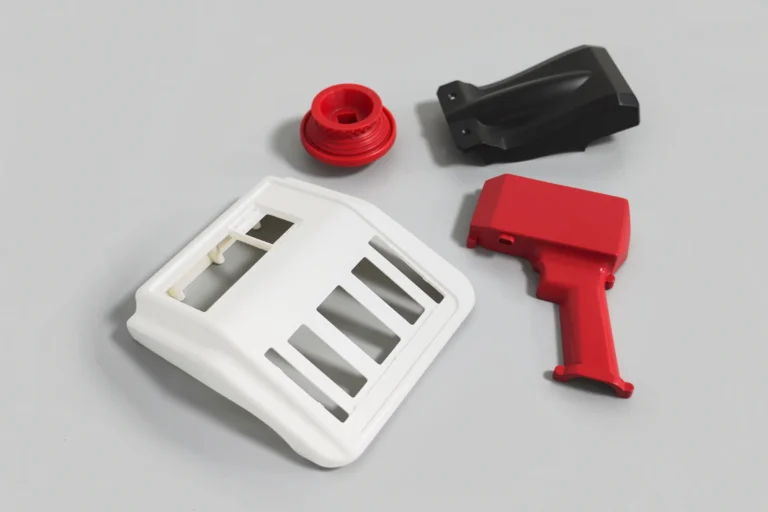
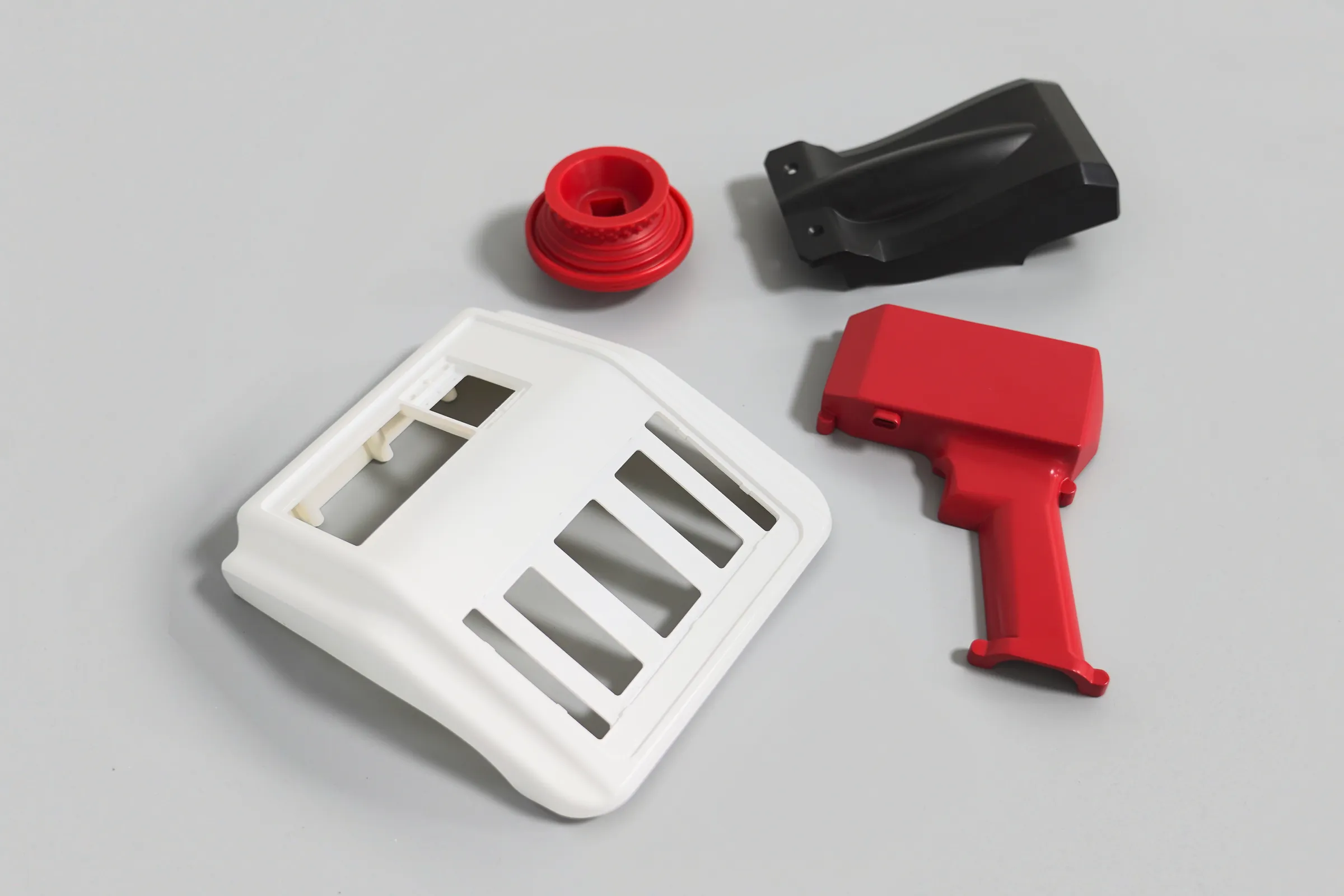
It is best suited to 1 to about 200 plastic parts that need to look and behave like the final injection-moulded product — enclosures, housings, covers, handles and functional prototypes.
Note: industrial vacuum casting of plastic is different from vacuum investment casting, which is a metal-casting process used mainly for jewellery. This guide is about plastic (polyurethane) vacuum casting.
How does vacuum casting work?
The process has five main steps and usually takes a few days from master to finished parts.
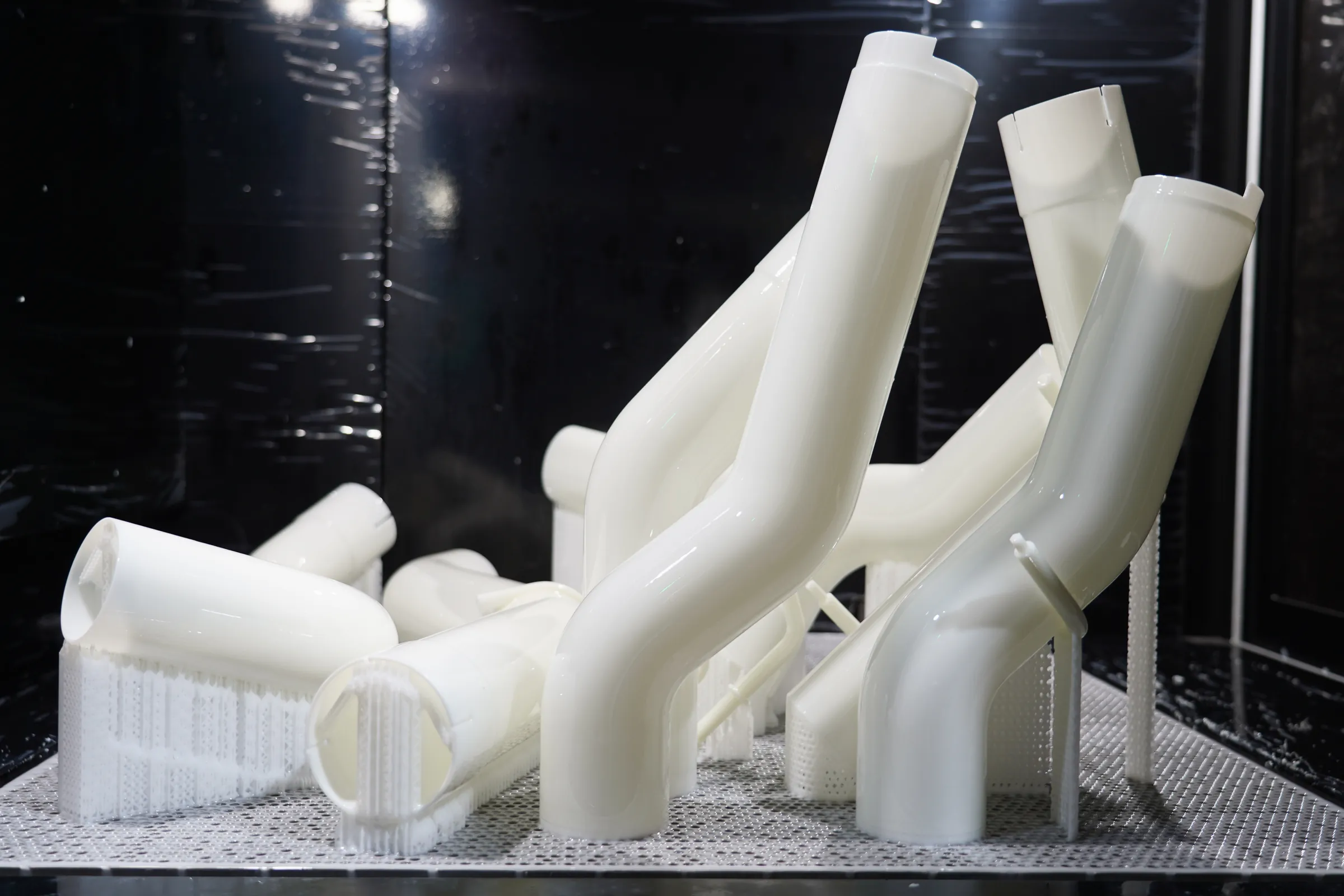
- Make the master pattern. A master is 3D printed, usually with SLA because it gives the smoothest surface and finest detail. At KM Rapid the master is printed in-house on our SLA machines, then sanded and finished so the mould captures a clean surface.
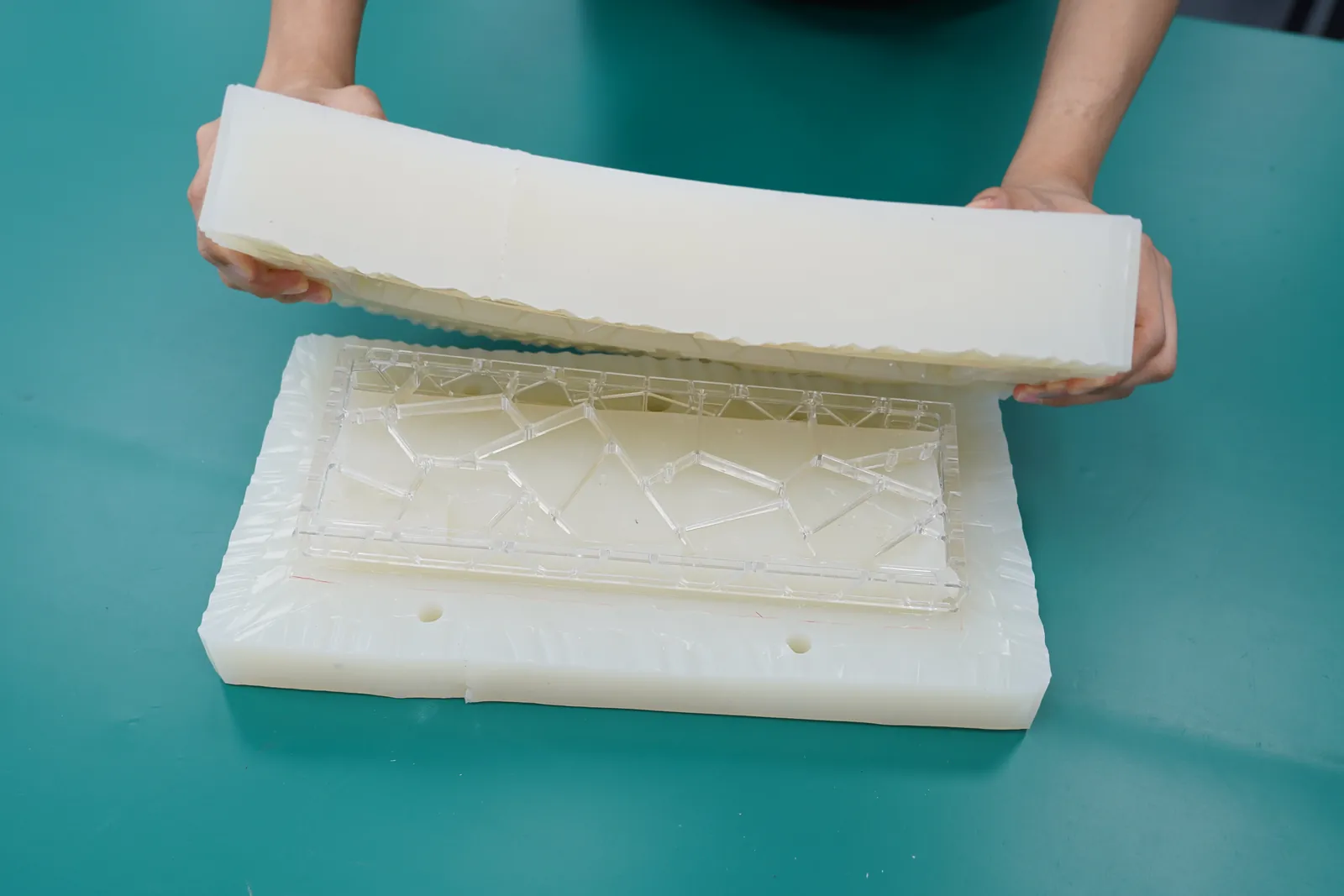
- Make the silicone mould. The master is fixed inside a mould frame and liquid silicone is poured around it. Once the silicone cures, it is cut open along a parting line and the master removed. The silicone mould is now complete, with a hollow cavity in the exact shape of the part.
- Cast under vacuum. A two-part liquid polyurethane (PU) material is mixed and poured into the closed silicone mould inside a vacuum chamber. The vacuum removes air so the material flows into thin walls, ribs and textures without voids.
- Cure and demould. The filled mould is cured in a heated oven for about 1–2 hours. The silicone is flexible, so the cured part is peeled out without damage, and the mould is reused for the next part — about 10–15 times in total.
- Finish and inspect. Gates and flash are removed, then parts are painted or polished in our in-house finishing shop (silk-screen printing is also available), before a dimensional check against the drawing.
Each silicone mould can be used about 10–15 times before the detail and surface start to degrade. For larger quantities, several moulds are made from the same master.
Vacuum casting materials
The big advantage of vacuum casting is the range of polyurethane resins, which can imitate most common production plastics. The resin is chosen to match the mechanical or visual property the part has to demonstrate.
| Resin type | Imitates | Typical use |
|---|---|---|
| Rigid ABS-like | ABS, PC/ABS | Enclosures, housings, structural parts |
| PP-like | Polypropylene | Living hinges, snap fits, containers |
| PA-like (nylon) | Nylon | Tougher functional parts |
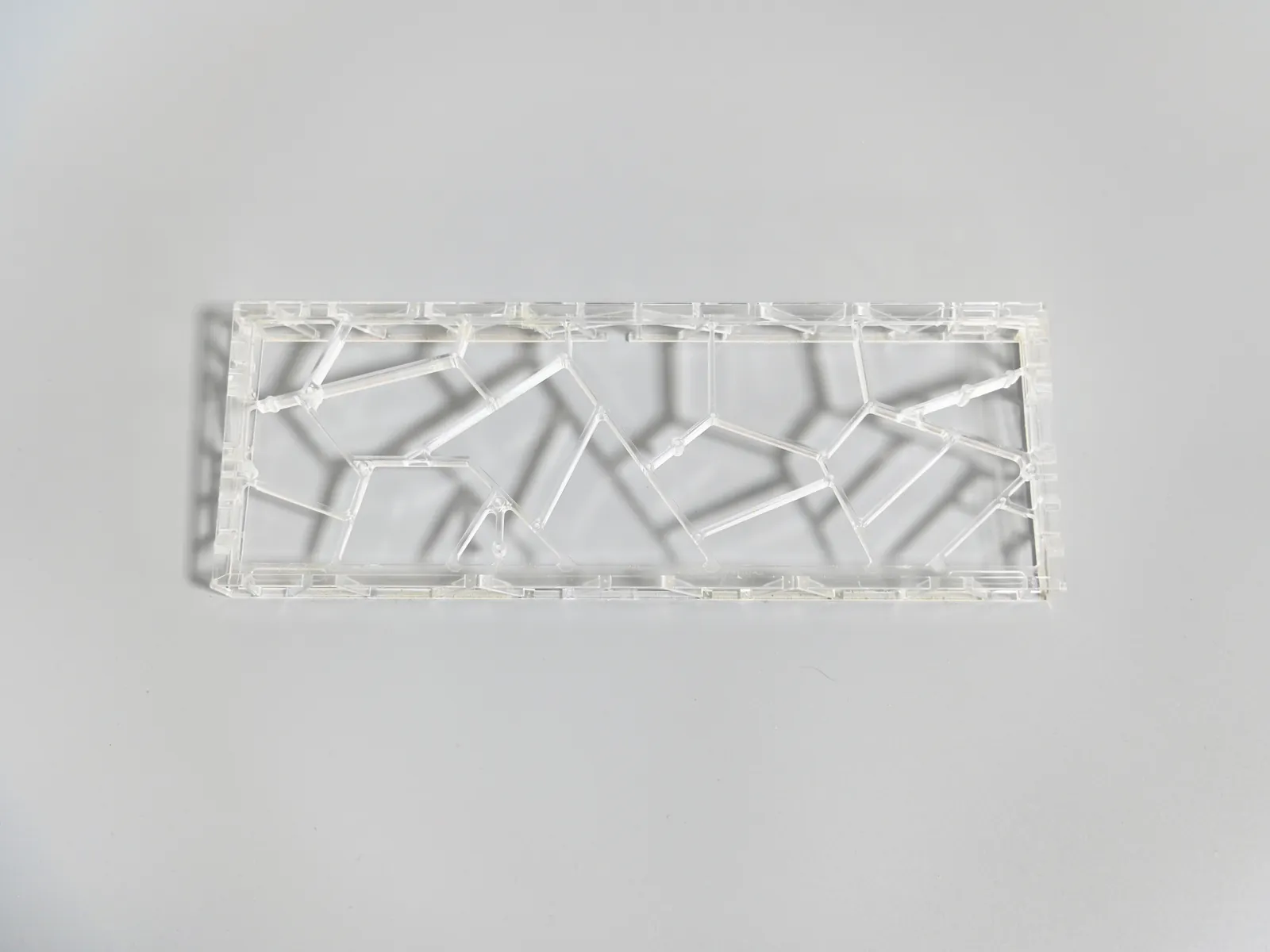
| Clear / transparent | PMMA (acrylic) | Lenses, light pipes, see-through housings |
| Rubber-like | TPU, silicone rubber | Seals, gaskets, grips, Shore 30A–90A |
| Flame-retardant | Flame-retardant plastics | Electrical and enclosure parts |
| Heat-resistant | High-temp grades | Parts exposed to higher temperatures |
Parts can be painted and colour-matched after casting. Clear parts can be polished to full transparency or tinted. Rubber-like grades are specified by Shore hardness, from a soft Shore 30A up to a firm Shore 90A.
Cast resins imitate production plastics. If your test needs the genuine material — real PP, or nylon for strength and higher temperatures — we can also produce the part by 3D printing (FDM for PP, SLS or MJF for nylon, with nylon parts up to 530 × 530 × 530 mm). See our 3D printing service.
Tolerances and accuracy
Vacuum cast parts are typically held to ISO 2768 coarse (class c) tolerances, because the silicone mould flexes slightly and the resin shrinks a little as it cures. As a general guide:
| Dimension (mm) | Coarse (c) tolerance |
|---|---|
| 6 – 30 | ±0.5 mm |
| 30 – 120 | ±0.8 mm |
| 120 – 400 | ±1.2 mm |
| 400 – 1000 | ±2.0 mm |
If a few dimensions need to be tighter than this, they can often be controlled by machining the master or adding features after casting. For parts that must hold fine tolerances across the whole geometry, CNC machining is the better route. Mark any critical dimensions on a 2D drawing so they can be reviewed before the mould is made.
How many parts, how big and how long?
- Minimum order: none — we can cast a single part.
- Mould life: each silicone mould can be used about 10–15 times. Beyond that, more moulds are made from the same master.
- Typical project size: 1 to about 200 parts, and usually no more than 500. This is the sweet spot where vacuum casting beats both 3D printing (slow and costly per part at this quantity) and injection moulding (too expensive to tool for small runs). Above about 500 parts, a steel injection mould is usually the more economical choice.
- Maximum part size: vacuum cast parts up to 2000 × 800 × 600 mm, so large covers and housings can often be cast in one piece.
- Lead time: depends on part size, quantity and finish. Our engineers quote the price and lead time for your specific project once they see the CAD file.
When should you use vacuum casting?
Vacuum casting is the right choice when you need:
- Production-like appearance. Smooth, mouldable surfaces that look like a finished product, for marketing samples, photography or trade shows.
- Small batches cost-effectively. Up to about 200 parts without paying for a steel injection mould.
- A range of material feels. Rigid, clear, rubber-like or flame-retardant parts from one process.
- Assemblies and functional tests. Parts you can fit together, drop-test and hand to customers.
- A bridge to production. Pilot-run or pre-production parts while an injection tool is being built.
It is not the best choice when you need more than about 500 parts (use injection moulding), very tight tolerances everywhere (use CNC), or just one or two parts quickly (use 3D printing — SLA for appearance models, FDM for strong functional parts where layer lines do not matter).
Vacuum casting vs 3D printing vs injection moulding
| Vacuum casting | 3D printing | Injection moulding | |
|---|---|---|---|
| Tooling | Silicone mould (cheap, fast) | None | Steel/aluminium mould (expensive, slow) |
| Best quantity | 1–200 | 1–10 | 500+ |
| Surface finish | Smooth, production-like | Layer lines (except SLA) | Excellent |
| Materials | Resins imitating ABS, PP, clear, rubber | Resins, nylon, metal | Full production plastics |
| Upfront cost | Low | Lowest | High |
| Cost per part | Medium | High at volume | Lowest at volume |
A common path is: 3D print the first concept, vacuum cast up to about 200 production-like parts for testing and early sales, then move to injection moulding once the design is final and volumes are high. For the differences between casting and sheet-forming, see vacuum casting vs vacuum forming.
Advantages and limitations
Advantages
- Low tooling cost compared with injection moulding
- Fast — parts in days, not weeks
- Wide material range from one process
- Excellent surface finish straight from the mould
- Great for clear, coloured and rubber-like parts
Limitations
- Each mould can only be used about 10–15 times
- Coarse tolerances compared with CNC
- Above about 500 parts, a steel injection mould is usually more economical
- Cast parts typically reach around 80–90% of the quality of an equivalent injection-moulded part — close, but not identical
How to get a vacuum casting quote
To quote accurately, send:
- A 3D CAD file (STEP preferred; STL is fine)
- Quantity
- Material or properties needed (e.g. ABS-like, clear, rubber-like Shore 60A, flame-retardant)
- Colour and surface finish
- A 2D drawing marking any critical tolerances, if you have them (a 2D drawing is required for injection moulding)
- Target delivery date
Every quote includes a free design-for-manufacturing (DFM) review, so our engineers flag anything in the design that could cause casting problems before you commit. We can sign an NDA before you share files. See our vacuum casting service or get a quote. New to prototyping? Start with What Is Rapid Prototyping?
FAQ
What is vacuum casting used for?
Vacuum casting makes small batches of production-like plastic parts — enclosures, housings, covers, handles and functional prototypes — in quantities from 1 to about 200. It is widely used for marketing samples, functional testing, trade-show models and pilot runs before injection moulding.
What is the difference between vacuum casting and urethane casting?
They are the same process. "Urethane casting" and "polyurethane casting" refer to the resin used, while "vacuum casting" refers to the vacuum step that removes air during pouring. All three names describe casting polyurethane into a silicone mould.
How many parts can a silicone mould make?
Each silicone mould can be used about 10–15 times before the surface and detail degrade. For larger quantities, several moulds are made from the same master pattern. Vacuum casting projects typically run up to about 200 parts; above about 500 parts, a steel injection mould is usually more economical.
What materials can vacuum casting use?
Polyurethane resins that imitate ABS, PP and PA (nylon), plus clear (PMMA-like), rubber-like grades from Shore 30A to 90A, flame-retardant and heat-resistant grades. Parts can be painted, colour-matched and polished. If you need genuine PP or nylon, the part can be 3D printed instead.
Is there a minimum order or size limit?
There is no minimum order — we can cast a single part. Vacuum cast parts can be up to 2000 × 800 × 600 mm.
How accurate is vacuum casting?
Vacuum cast parts are typically held to ISO 2768 coarse (class c) tolerances — for example about ±0.8 mm on a 30–120 mm dimension. Critical dimensions can be controlled individually; for tight tolerances across the whole part, CNC machining is better.
Is vacuum casting cheaper than injection moulding?
For small batches, yes. Vacuum casting avoids the high cost of a steel injection mould, so for up to about 200 parts it is usually far cheaper overall. Injection moulding becomes cheaper per part only at high volumes, where the tooling cost is spread over thousands of parts.
How long does vacuum casting take?
It depends on the part size, quantity and finish. The master pattern and silicone mould are made first, then parts are cast (each one cures in about 1–2 hours) and finished. Send your CAD file and our engineers will quote the price and lead time for your project.
About KM Rapid KM Rapid (Guangdong KuaiMa 3D Technology Co., Ltd.) is a rapid prototyping and low-volume manufacturing company in Dongguan, China, founded in 2015. It operates a 5,000+ m² factory with 200+ industrial 3D printers and an in-house CNC workshop, specialises in vacuum casting with in-house SLA master-pattern printing and finishing, and is certified to ISO 9001.