Vacuum Casting vs Vacuum Forming: What's the Difference?
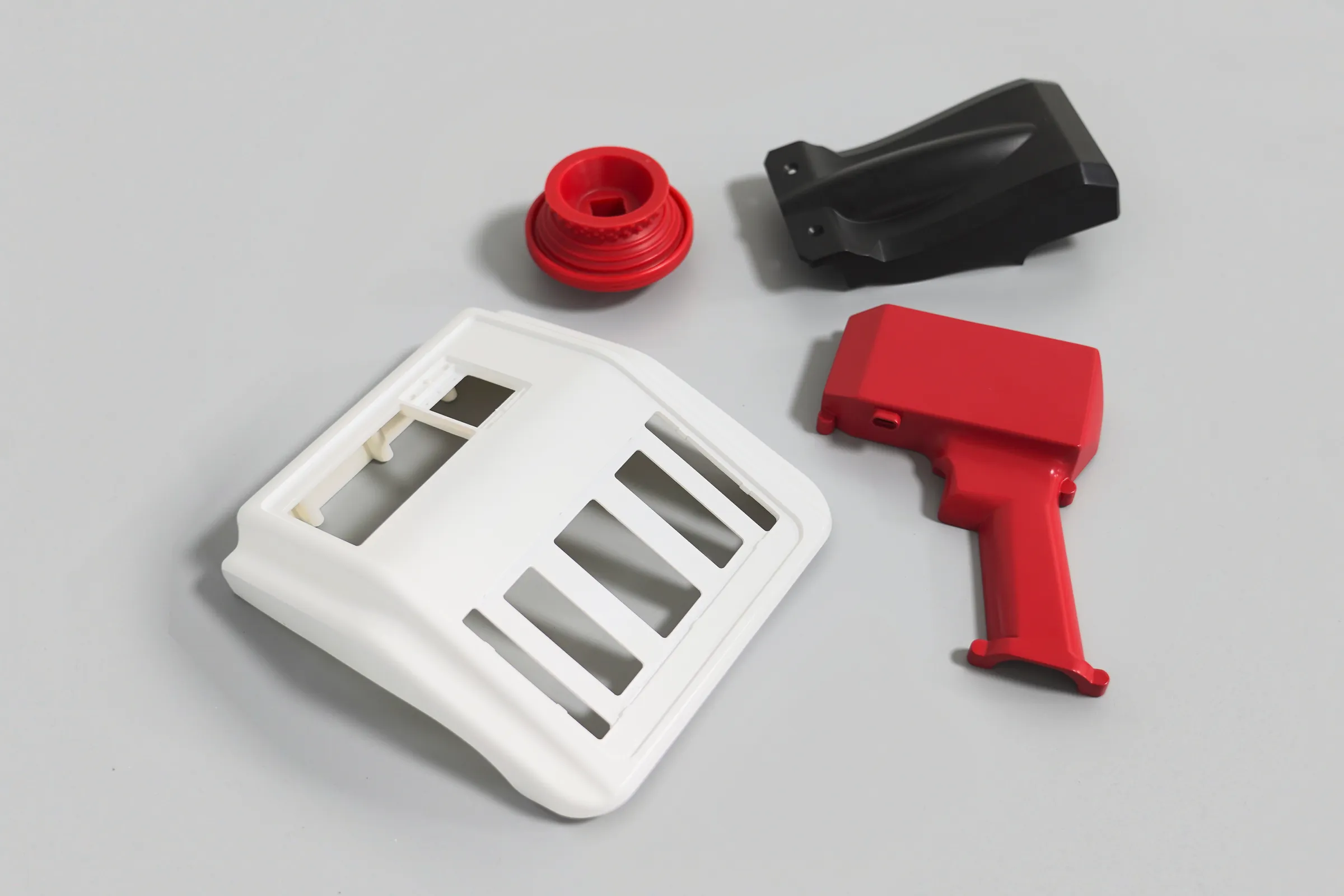
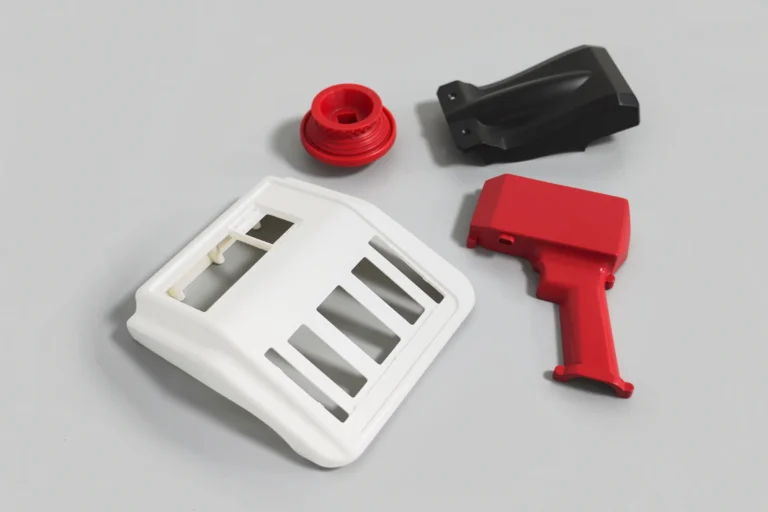
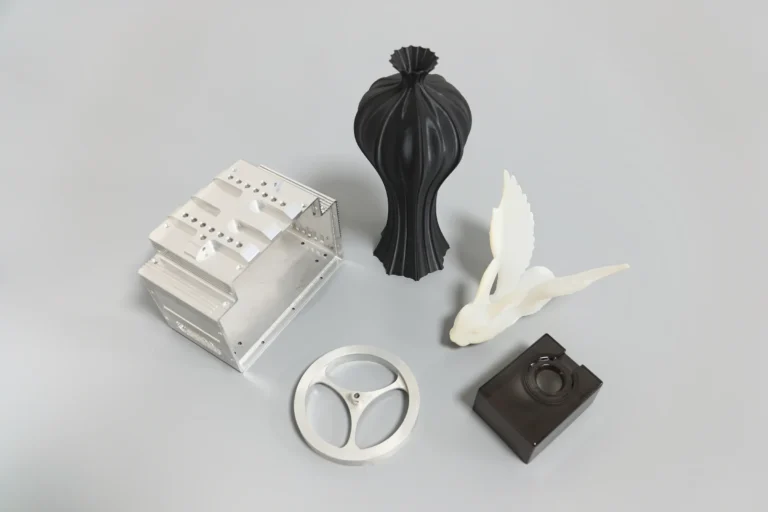
Vacuum casting and vacuum forming sound almost the same, but they are two completely different manufacturing processes. Vacuum casting pours liquid resin into a silicone mould to make solid, production-like plastic parts. Vacuum forming heats a plastic sheet and pulls it over a mould to make thin, hollow shells. If you are sourcing prototypes or low-volume parts, picking the wrong one wastes time and money, so this guide explains how each works and which to choose.
This article is written by the engineering team at KM Rapid, a vacuum casting and prototyping factory in Dongguan, China.
Quick answer
- Vacuum casting (also called urethane or polyurethane casting) makes solid or detailed plastic parts with real walls, ribs and features, in small batches. Think enclosures, housings, handles and functional prototypes.
- Vacuum forming (a type of thermoforming) makes thin, hollow shells from a plastic sheet. Think packaging trays, blister packs, large covers and bathtubs.
If you need a part that looks and works like an injection-moulded product, you almost certainly want vacuum casting, not vacuum forming.
How vacuum casting works
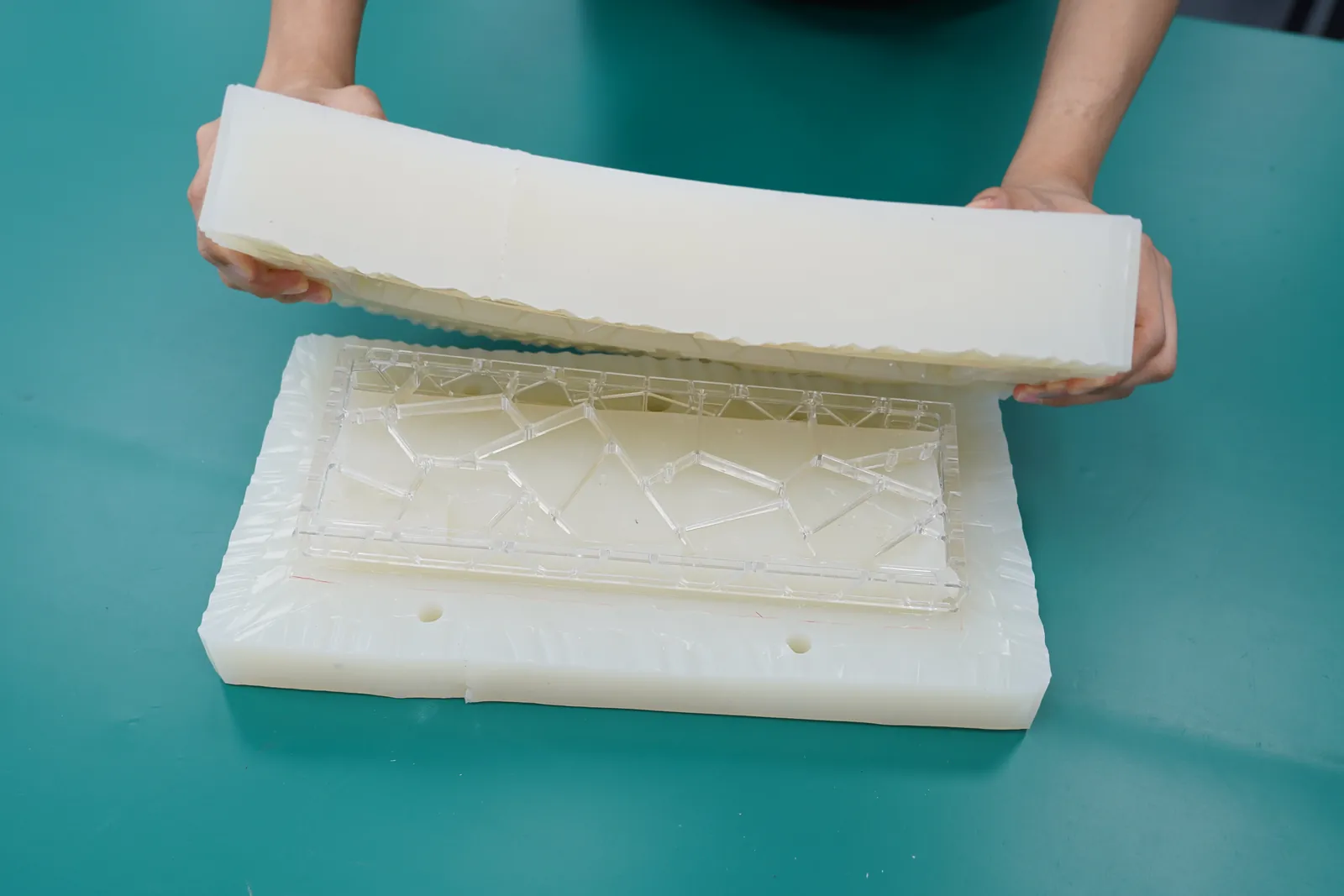
Vacuum casting starts with a master pattern, usually 3D printed with SLA for a smooth surface. The master is sealed in a box and liquid silicone is poured around it. Once the silicone cures, it is cut open and the master removed, leaving a hollow silicone mould.
Liquid polyurethane resin is then poured into the mould inside a vacuum chamber. The vacuum pulls out trapped air so the resin fills every detail without bubbles. After curing, the part is removed and the mould is used again.
Key points:
- Each silicone mould makes 10–15 parts.
- Resins can mimic ABS, PP and PA, or be clear (PMMA-like) or rubber-like from Shore 30A to 90A.
- Parts can be painted, silk-screened, polished and colour-matched.
- Typical tolerance follows ISO 2768 coarse class (for example about ±0.8 mm on a 30–120 mm dimension).
See our vacuum casting service for materials and details.
How vacuum forming works
Vacuum forming heats a flat plastic sheet (such as ABS, PETG, PVC or polystyrene) until it is soft, then drapes it over a single mould. A vacuum sucks the air out from underneath so the sheet wraps tightly around the mould shape. When it cools, the formed shell is trimmed off.
Key points:
- Makes one-sided, hollow shells with a roughly even wall thickness.
- Tooling is cheap and simple — often a single wooden or resin mould.
- Very fast per part once the mould is ready, good for large or high-volume thin parts.
- Cannot make solid parts, deep undercuts, fine internal details or precise engineering features.
Vacuum forming is common for packaging, disposable trays, point-of-sale displays, car interior panels and large covers.
Side-by-side comparison
| Vacuum casting | Vacuum forming | |
|---|---|---|
| What it makes | Solid / detailed plastic parts | Thin hollow shells |
| Starting material | Liquid polyurethane resin | Plastic sheet |
| Mould | Silicone mould from a 3D printed master | Single hard mould (wood, resin, aluminium) |
| Wall thickness | Designed, can vary | Roughly even, follows the sheet |
| Detail and features | High: ribs, bosses, textures, inserts | Low: one-sided shape only |
| Materials | ABS-like, PP-like, clear, rubber-like, flame-retardant | ABS, PETG, PVC, PS sheet |
| Typical quantity | 10–200 parts | 10 to thousands |
| Best for | Functional prototypes, enclosures, small-batch end-use | Packaging, trays, large covers, interior panels |
| Tolerance | ISO 2768 coarse (±0.3–0.8 mm range) | Looser, depends on sheet and cooling |
Which one should you choose?
Ask what the part actually is:
- A housing, enclosure, handle, bracket or any part with real walls and features → vacuum casting. It produces production-like parts you can assemble and test.
- A thin cover, tray, packaging shell or large single-surface panel → vacuum forming.
- A clear, rubber-like or flame-retardant functional part in small numbers → vacuum casting, which has resins for all of these.
- A cheap, lightweight shell in large numbers → vacuum forming.
A simple test: if the part needs to look and behave like a finished injection-moulded product, choose vacuum casting. If it is a thin shaped sheet, choose vacuum forming.
Why the names cause confusion
Both processes use a vacuum, and both have "vacuum" in the name, so buyers mix them up. But the vacuum does a different job in each:
- In vacuum casting, the vacuum removes air bubbles from liquid resin inside the mould.
- In vacuum forming, the vacuum pulls a soft plastic sheet down onto the mould.
There is also "vacuum investment casting," which is yet another process used to cast metal, mainly for jewellery. That is different again from both processes above.
What KM Rapid offers
KM Rapid specialises in vacuum casting for prototypes and low-volume production. We 3D print the master pattern in-house on our SLA machines, make the silicone mould and cast production-like parts in a wide range of polyurethane resins, with painting, silk-screen printing and polishing done in our own finishing shop.
We do not offer vacuum forming. If your part is a solid or detailed plastic component in small batches, vacuum casting is usually the better route, and we are happy to review your design and recommend the right process. Every quote includes a free DFM review, and we can sign an NDA before you share files.
For higher volumes of a final design, we also provide low-volume injection moulding. New to prototyping? Start with What Is Rapid Prototyping?
FAQ
Is vacuum casting the same as vacuum forming?
No. Vacuum casting pours liquid polyurethane into a silicone mould to make solid, detailed parts. Vacuum forming heats a plastic sheet over a mould to make thin hollow shells. They share the word "vacuum" but are different processes for different parts.
Which is cheaper, vacuum casting or vacuum forming?
Per part, vacuum forming is usually cheaper for simple thin shells in larger numbers. For detailed, production-like parts in small batches, vacuum casting is more cost-effective than injection moulding and gives a far better result than forming. The right comparison depends on what the part is.
Can vacuum casting make hollow parts?
Yes, vacuum casting can make hollow enclosures and housings with designed wall thickness, unlike vacuum forming which only makes one-sided shells. Send your CAD file and our engineers will confirm feasibility.
What materials can vacuum casting use?
Polyurethane resins that mimic ABS, PP and PA, plus clear (PMMA-like), rubber-like (Shore 30A–90A), heat-resistant and flame-retardant grades.
How many parts can each process make?
A vacuum casting silicone mould makes 10–15 parts, so projects typically run from about 10 to a few hundred. Vacuum forming can run from a few parts to thousands, depending on the tooling.
Do you offer vacuum forming?
No. KM Rapid focuses on vacuum casting, CNC machining and 3D printing. If vacuum casting suits your part, send your CAD file for a quote.
About KM Rapid KM Rapid (Guangdong KuaiMa 3D Technology Co., Ltd.) is a rapid prototyping and low-volume manufacturing company in Dongguan, China, founded in 2015. It operates a 5,000+ m² factory with 200+ industrial 3D printers and an in-house CNC workshop, offers additional manufacturing services, and is certified to ISO 9001.