
Materials for Vacuum Casting and SLA 3D Printing
Choose a material around what the part needs to demonstrate: appearance, fit, handling or a specific test. KM Rapid offers polyurethane casting resins for silicone-mold prototypes and photopolymer resins for SLA printing. Start with the manufacturing process, then review the grade, finish and service conditions with our engineers.
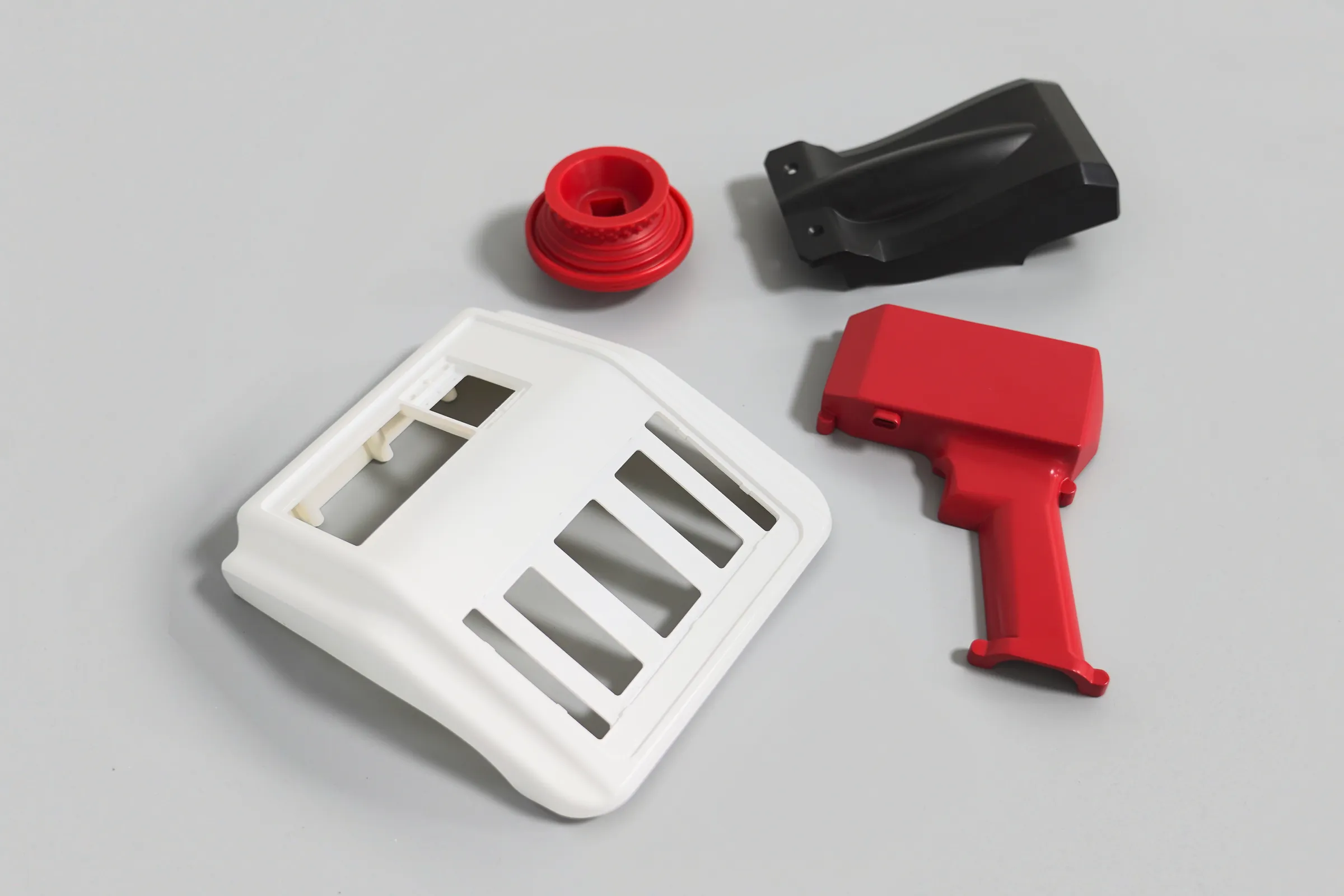
Vacuum Casting Resins
These resins form the part inside a silicone mold. The silicone used to make that mold is a separate tooling material and is not a part-resin option.
Hei-Cast 8158
H&K Ltd. · Polyurethane vacuum casting resin
ABS-like prototypes and small batches produced in silicone molds. The supplier lists beige, white and black variants; specify the required appearance when requesting a quote.
ABS-like describes the intended simulation, not an ABS thermoplastic composition. Review loading, temperature, surface finish and the required cure before selecting this grade.
DPI PX225
DPI · Polyurethane vacuum casting resin
A white casting resin intended for prototype parts with thermoplastic properties close to POM, according to its supplier sheet. Use it as a starting point for a material review.
This is a polyurethane system, not machined POM. Discuss friction, wear, dimensions and service conditions rather than assuming equivalence to a production thermoplastic.
Source basis: H&K Hei-Cast 8158 technical information (issue 2015-11-27) and the DPI PX225 technical data sheet. Grade identity and process are shown here; project-specific properties and cure requirements are reviewed before quotation.
Explore vacuum casting for the manufacturing process and drawing review.
SLA Printing Resins
The following Kings3D grades are liquid photopolymers cured by light. Color and an ABS-like or acrylic-like description do not make a resin chemically identical to those thermoplastics. Use the grade-specific data and the planned test to guide selection.
KS158T
Kings3D · SLA photopolymer · Clear
Clear-part concepts, display models and visual assembly reviews.
Review the optical effect, wall geometry and finishing. Clear appearance is not an optical-grade or PMMA specification.
KS408A
Kings3D · SLA photopolymer · Opaque white
Housings, form models and detailed assembly prototypes.
An ABS-like photopolymer for prototyping; it is not injection-molded ABS. Assess the intended load and environment.
KS608A
Kings3D · SLA photopolymer · Pale yellow
Form and fit prototypes and detailed concept models.
Select against the application and supplier data. A grade name alone does not establish strength relative to another resin.
KS808-BK
Kings3D · SLA photopolymer · Carbon black
Black appearance prototypes and master-pattern development.
An ABS-like photopolymer. The listed specimen properties follow 90 minutes of UV post-cure; finishing and part geometry still matter.
KS908C
Kings3D · SLA photopolymer · Brown
Detailed models and master patterns, including footwear and art-model development.
Review fine features, support access and the intended pattern-making route. Application examples do not establish suitability for every part.
Compare Supplier Specimen Data
| Grade | Tensile strength (MPa) | Hardness (Shore D) | HDT (°C, 66 PSI) | Tg (°C) |
|---|---|---|---|---|
| KS158T | 25–30 | 72–78 | 50–60 | 55–70 |
| KS408A | 27–31 | 76–82 | 55–65 | 55–70 |
| KS608A | 25–30 | 76–82 | 58–68 | 55–70 |
| KS808-BK | 25–30 | 75–85 | 58–70 | 62–75 |
| KS908C | 25–30 | 74–80 | 58–68 | 55–70 |
Supplier typical values from the Kings3D technical data sheets, measured on UV-post-cured specimens. KS808-BK specifies 90 minutes of UV post-cure; the other four sheets do not specify a duration. Tensile strength: ASTM D638. Hardness: ASTM D2240, Shore D. Heat deflection temperature (HDT): ASTM D648 at 66 PSI. Glass transition temperature (Tg): DMA, E″ peak. These are specimen data, not guaranteed properties of a finished printed part. HDT and Tg are not continuous-use temperature ratings.
Choose the Process Before Comparing Grades
| Question | Vacuum casting | SLA printing |
|---|---|---|
| How is the part made? | Liquid polyurethane is cast in a silicone mold. | Light cures a photopolymer layer by layer. |
| What should be reviewed? | Master pattern, mold strategy, resin system, cure and finishing. | Orientation, supports, resin grade, post-cure and finishing. |
| What does a material label mean? | ABS-like or POM-like identifies an intended simulation, not identical chemistry. | A named grade and its data sheet define the resin; a color or family label is not enough. |
If you need the exact production thermoplastic or a metal grade, discuss CNC machining or injection molding as an alternative. Read the SLA process guide for support, orientation and post-processing considerations.
What to Include in a Material Enquiry
Send the CAD model and drawing, quantity, intended use, critical dimensions, cosmetic faces and any heat, chemical or mechanical exposure. Specify whether the part is for display, assembly checks or a functional test. Our team can review the material and process together; suitability for regulated applications or long-term service needs its own evidence. Contact us for lead time.
Ready to Start Your Project?
Share your CAD file and what the part must do. We will review the process, resin and finish for your project.