
Wire EDM Services: Slow, Medium and High-Speed Wire Cutting
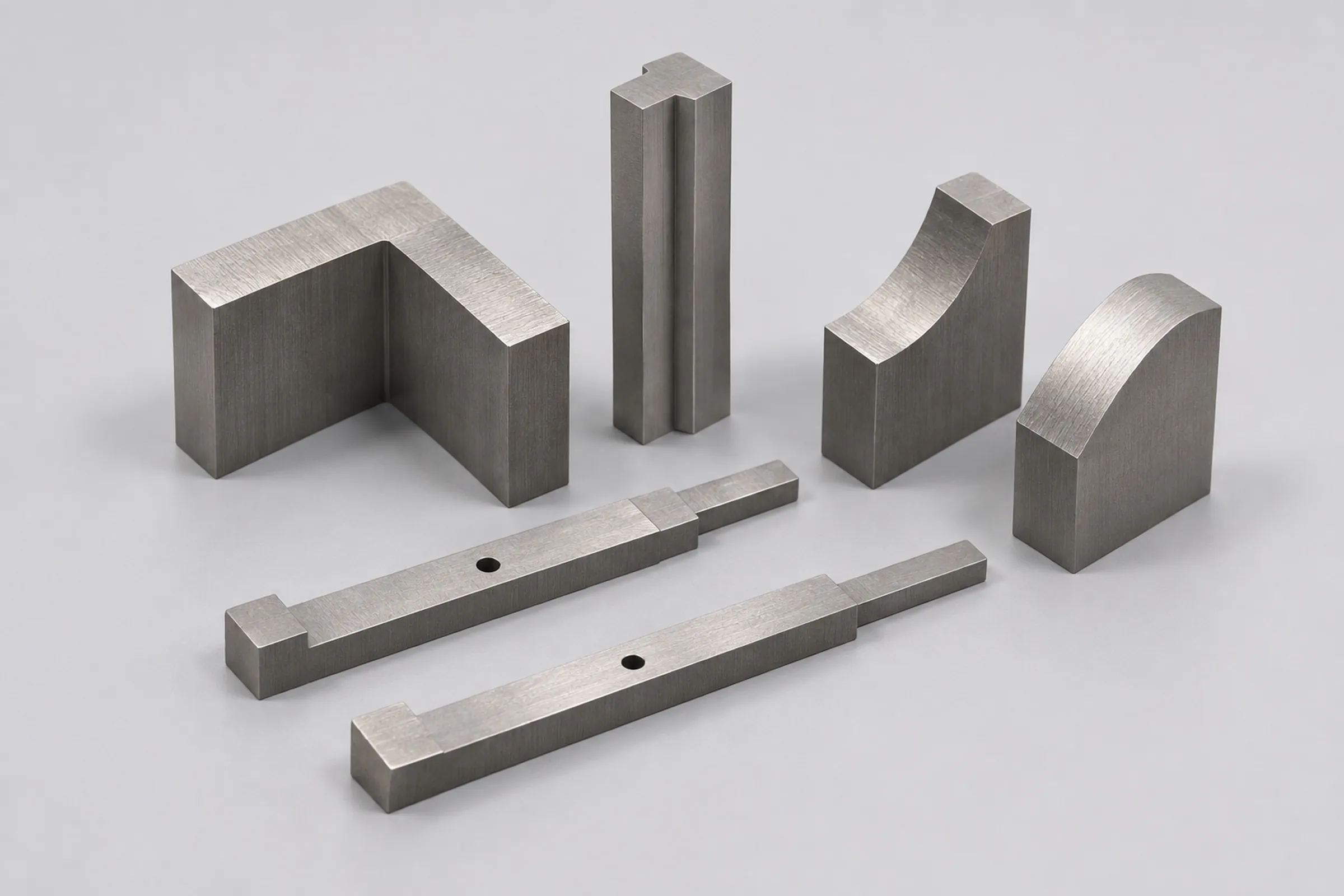
Wire electrical discharge machining removes material from an electrically conductive workpiece using controlled electrical discharges along a wire electrode. It cuts profiles and contours without relying on a rotating cutting tool. Slow-speed, medium-speed and high-speed wire EDM parts are produced with qualified partner factories; KM Rapid handles DFM review, project management, quality inspection and delivery. CNC machining and surface finishing are coordinated when the part needs several operations.
Service Capabilities
| Item | Capability |
|---|---|
| Processes | Slow-speed (precision) wire EDM, medium-speed wire EDM and high-speed wire EDM |
| Materials | Any electrically conductive material, including aluminum alloys, tool steels and stainless steels |
| Minimum order | 1 piece |
| Lead time | Samples in about 7 days; production lead time depends on quantity |
| Tolerance and size | Depend on wire type, part thickness and material; specified in the quotation based on your drawing |
| Finishing | Can be combined with CNC machining, anodizing, coating, sandblasting and other finishes |
| Inspection | Dedicated QC staff with 2D vision measuring, CMM and height gauges |
| Quality certification | Partner factory certified to ISO 9001 |
| NDA | Available |
| Pricing | Quoted from your drawing (cut area, thickness, tolerance and wire type) |
Describe the feature you need and share the drawing, material condition and purchasing quantity. KM Rapid reviews the wire cutting operation in the context of the complete part, including features made before or after it. The quotation sets the part-specific tolerance and size requirements. The partner factory’s ISO 9001 certification applies to that production partner; it is separate from KM Rapid’s own ISO 9001 certification.
Conductive Materials and Part Condition
Wire EDM can cut electrically conductive materials, including aluminum alloys, tool steels and stainless steels. Specify the material grade, workpiece condition and any heat treatment already performed or planned. Conductivity is essential, while thickness and the required features also affect process selection. Include surface requirements where the cut surface will form a sliding, sealing or other functional interface. KM Rapid reviews these details with the production partner before quoting.
Typical Applications
Typical applications include hardened steel components, internal profiles with tight corners, narrow slots, thin plates, punches and die inserts, precision shims and toothed profiles. Identify which edges control fit and which surfaces are mainly cosmetic. Wire access still matters: a profile needs a continuous cutting path through the workpiece, and an enclosed internal contour may need a start opening. The drawing review checks that the required shape can be reached.
How Your Project Moves Forward
Define the feature
Send the CAD model, drawing, material condition and intended use. Highlight the profile, slots and surfaces that control fit, and identify any heat treatment in the manufacturing sequence.
Choose the wire process
KM Rapid reviews the surface, tolerance and cost priorities with the partner factory. The selected wire type and the related CNC or finishing work are included in the agreed project scope.
Coordinate machining
The partner factory performs the wire EDM work. KM Rapid follows production, manages drawing clarification and coordinates machining or finishing needed before and after wire cutting.
Check and deliver
Dedicated QC staff can use 2D vision measuring, CMM and height gauges. KM Rapid manages incoming inspection and delivery against the drawing and agreed inspection requirements.
Design and Drawing Review
Mark critical profiles, corners, narrow slots, datums and material thickness on the drawing. Internal corners are affected by the wire and machining conditions, so avoid assuming perfectly sharp corners. Explain whether the part will be used individually or assembled against a mating component. Clear drawing revisions and acceptance requirements help keep the wire cutting, CNC machining and inspection stages aligned.
Machining, Finishing and Delivery
Wire EDM can be combined with CNC machining, anodizing, coating, sandblasting and other finishes. Review the manufacturing sequence where the same part includes milled faces, drilled features and wire-cut geometry. Identify any surfaces that must be masked or preserve a functional fit. KM Rapid coordinates the agreed operations and delivery so the complete part can be reviewed within one project.
Choosing Slow, Medium or High-Speed Wire EDM
| Process | When it fits | What to review |
|---|---|---|
| Slow-speed wire EDM | Highest precision and best surface finish of these three options | Suited to die inserts and precision components |
| Medium-speed wire EDM | A balance between precision, surface finish and cost | Suited when requirements fall between slow-speed and high-speed options |
| High-speed wire EDM | The most economical of these three options | Suited to parts with less demanding precision requirements |
Explore CNC machining and rapid injection molding for related component and tooling projects.
Frequently Asked Questions
Can’t find your answer? Talk to our engineers.
-
What materials can wire EDM cut?
Wire EDM can cut electrically conductive materials, including aluminum alloys, tool steels and stainless steels.
-
What is the difference between slow, medium and high-speed wire EDM?
Slow-speed wire EDM offers the highest precision and best surface finish of these three options and suits die inserts and precision parts. High-speed wire EDM is the most economical option for less demanding precision requirements. Medium-speed wire EDM provides a balance between them.
-
How is wire EDM priced?
Wire EDM is quoted from your drawing. Cut area, part thickness, tolerance requirements and wire type determine the quotation.
Ready to Start Your Project?
Send your CAD model, drawing, material and quantity. Our engineers will review the manufacturing route and quotation.