
Vacuum Casting and Urethane Casting Services
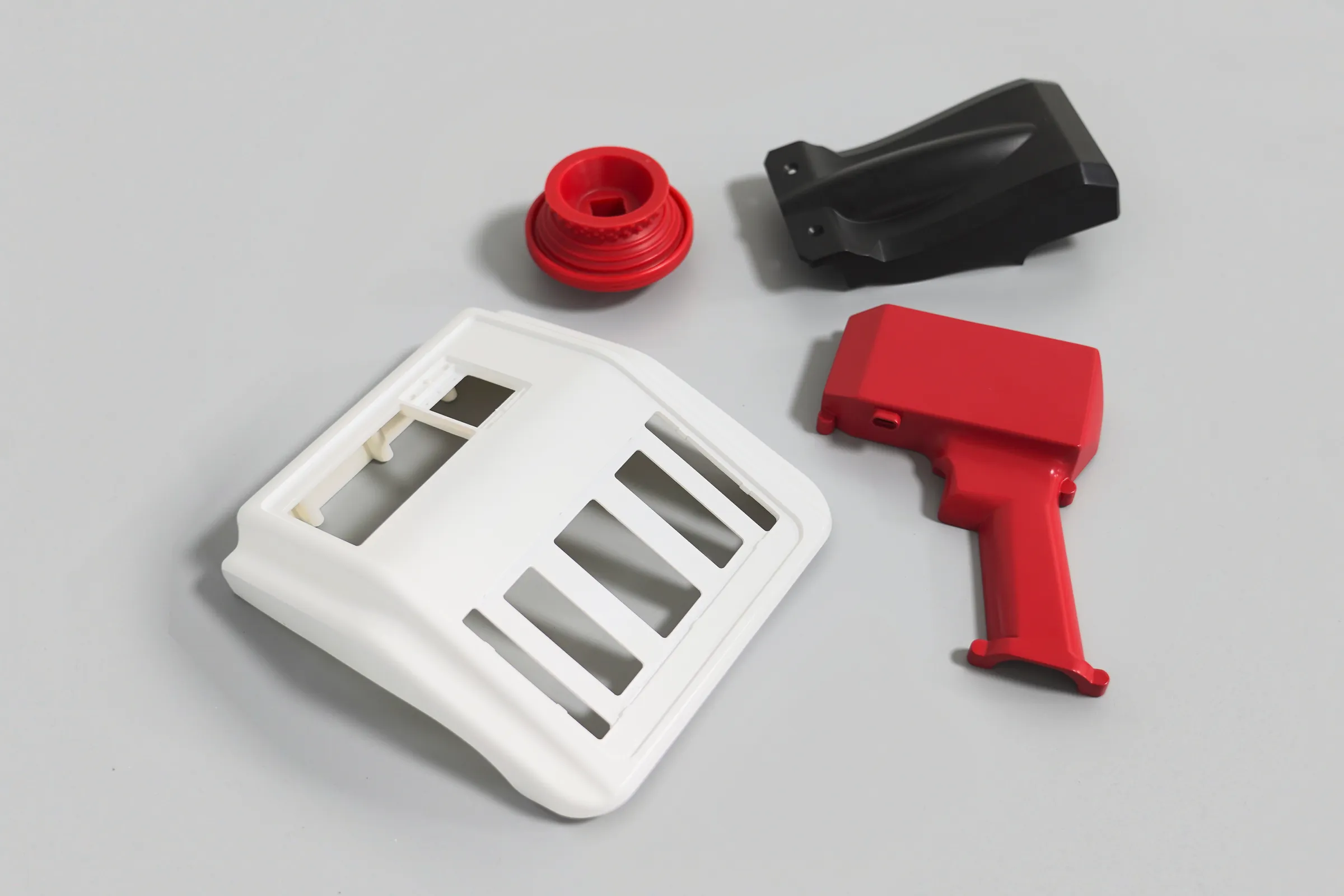
KM Rapid makes vacuum cast parts in silicone moulds at our factory in Dongguan, China. Vacuum casting, also called urethane casting or polyurethane casting, turns a master model into small batches of plastic and rubber-like parts with production-like materials and finishes, without the cost of a steel injection mould.
It is a good fit for functional prototypes, engineering validation builds, pre-production samples and market-test units, typically when you need around 10 to 50 parts per design.
10–15
Parts per mould
2.0 m
Maximum mould size
ISO 2768-c
Standard tolerance
Our engineers quote price and lead time based on your project.
How Vacuum Casting Works
- Master model. We make a high-accuracy master, usually by SLA 3D printing or CNC machining, from your 3D CAD file.
- Silicone mould. The master is placed in a casting box and covered in liquid silicone. After curing, the mould is cut open and the master is removed, leaving a cavity of the exact shape.
- Vacuum casting. Polyurethane resin is mixed and poured into the mould inside a vacuum chamber, which removes air bubbles and fills fine details.
- Curing and demoulding. The part cures in the mould and is then removed. Each silicone mould typically produces 10–15 parts.
- Finishing. Parts are trimmed and finished to your requirements, such as painting, texture or printing.
Vacuum Casting Capabilities
| Item | Value |
|---|---|
| Standard tolerance | ISO 2768-c (coarse), for example ±0.8 mm for nominal linear sizes over 30 mm up to 120 mm |
| Maximum mould size | 2.0 × 1.2 × 1.0 m |
| Minimum wall thickness | 0.5 mm (1.5–2.5 mm recommended) |
| Parts per silicone mould | 10–15 |
| Mould storage life | About 30 days |
| Price and lead time | Our engineers quote price and lead time based on your project. |
Vacuum Casting Materials
We use casting resins from Hei-Cast (Japan) and Axson (France). Common options include:
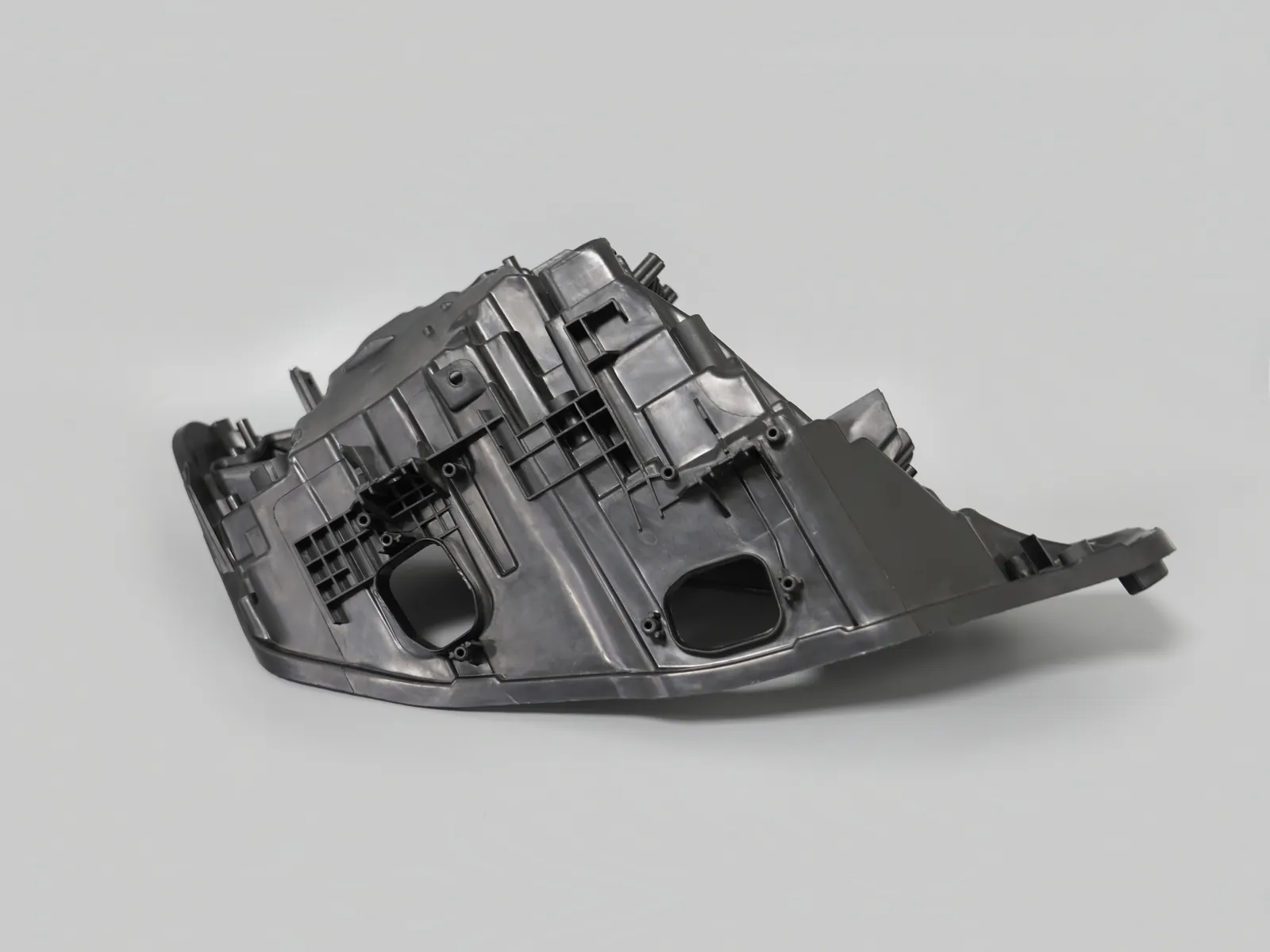
- ABS-like resins for housings, enclosures and general functional parts
- PC-like resins for tougher parts
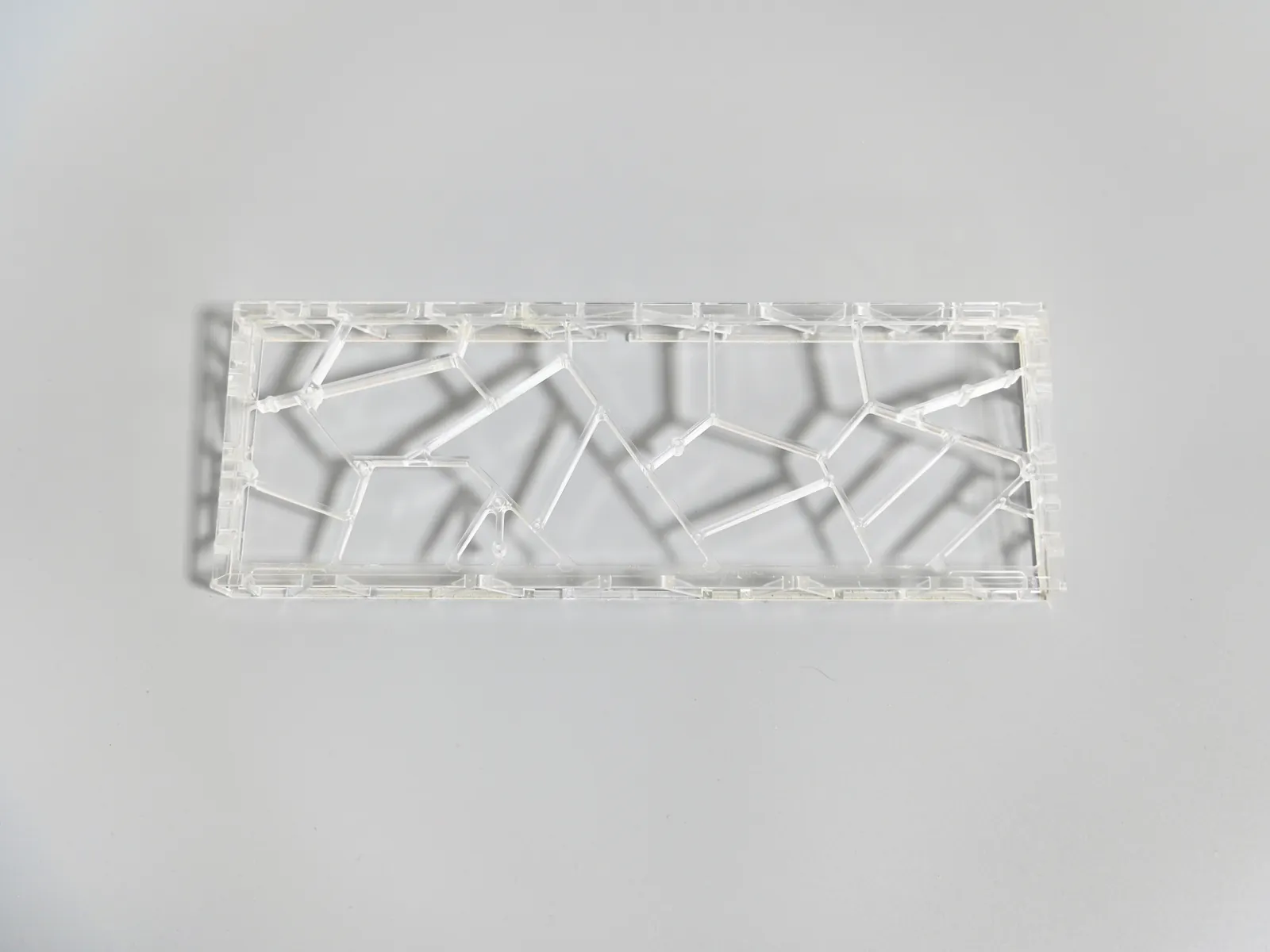
- PMMA-like (clear) resins for transparent covers, light guides and lenses
- PP-like and PA-like resins
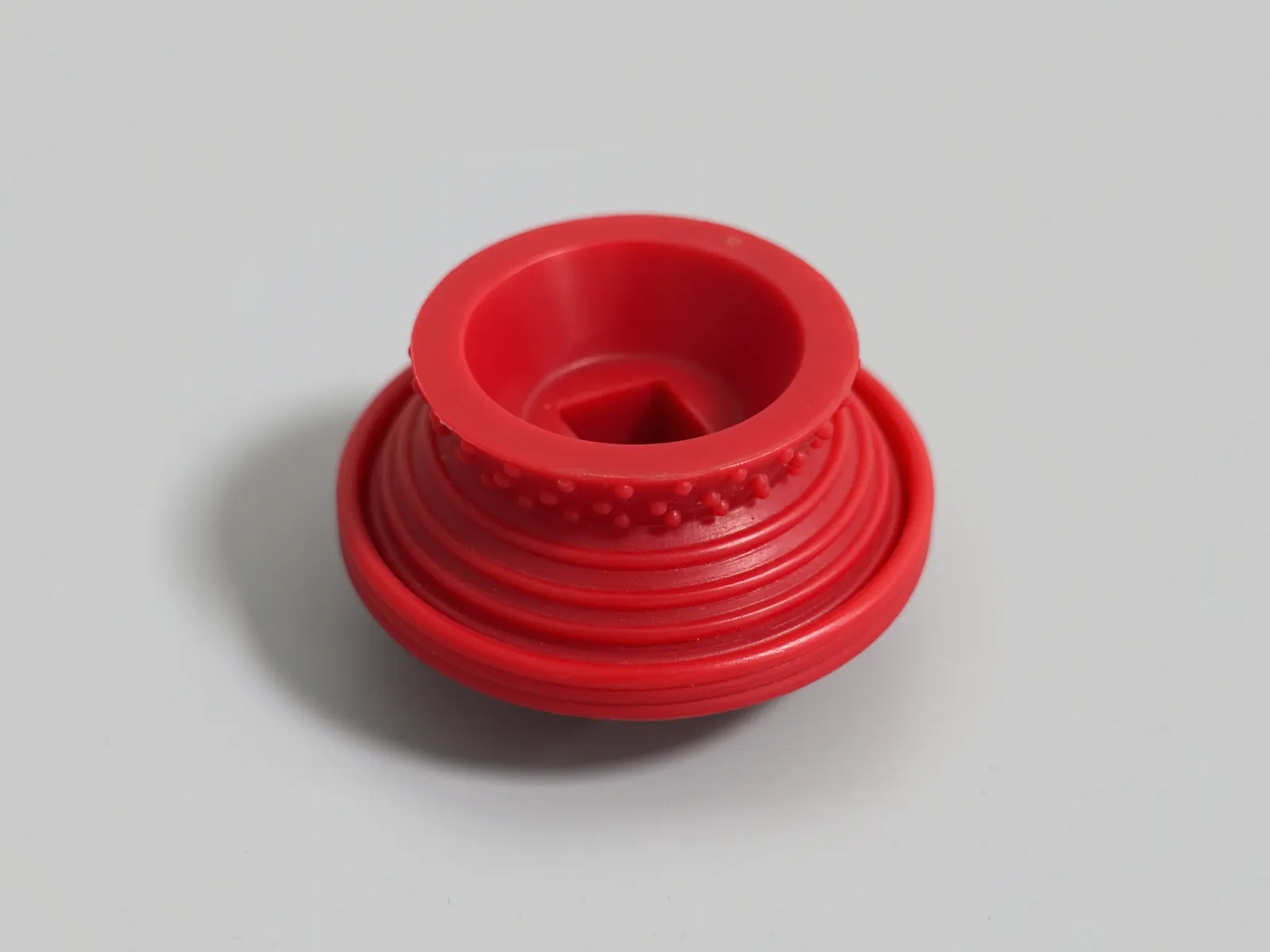
- Silicone and TPU rubber-like materials for seals, grips, buttons and soft-touch parts
Special grades are available for heat resistance up to 120 °C, UL94-V0 flame retardance, glass-filled strength, and transparent, translucent or colour-matched parts. Rubber-like materials are available in different hardness levels.
Finishing Options
- Painting and colour matching
- Silk-screen printing
- Vacuum electroplating
- Transparent polishing for clear parts
- Overmolding of soft materials onto rigid parts
Design Guidelines for Vacuum Cast Parts
- Wall thickness: keep walls at least 0.5 mm; 1.5–2.5 mm gives the most reliable results.
- Uniform walls: keep wall thickness as even as possible to reduce warping and sink marks.
- Mould capacity: our equipment accepts moulds up to 2.0 × 1.2 × 1.0 m. Maximum finished-part size is assessed from the drawing, allowing for mould walls, gating, orientation and demoulding.
- Tolerances: use ISO 2768-c (coarse), for example ±0.8 mm for nominal linear sizes over 30 mm up to 120 mm; tell us which dimensions are critical and our engineers will review them.
- Files: send a 3D CAD file (for example STEP). We review every file for manufacturability before quoting.
Vacuum Casting vs 3D Printing vs Rapid Injection Molding
| 3D printing | Vacuum casting | Rapid injection molding | |
|---|---|---|---|
| Best quantity | One-off to a few parts | Small batches, typically up to about 50 parts | Larger runs |
| Tooling | None | Silicone mould, 10–15 parts each | Rapid tool, up to 10,000 shots |
| Tooling cost | None | Low | About 1/3 of a production mould |
| Materials | Printing resins, nylons, metals | Production-like PU resins and rubbers | Production plastics such as ABS, PC+GF, PEEK, TPU |
| Typical timing | Fastest for single parts | Our engineers quote price and lead time based on your project. | Parts in about 2 weeks |
A common route is to 3D print the master, vacuum cast the first batch for testing, then move to rapid injection molding when the design is stable.
Why KM Rapid for Vacuum Casting
- Large mould capacity: moulds up to 2.0 × 1.2 × 1.0 m; finished-part dimensions reviewed from your drawing.
- Vacuum casting tolerances: ISO 2768-c (coarse), for example ±0.8 mm for nominal linear sizes over 30 mm up to 120 mm
- In-house masters: 200+ industrial 3D printers and 50+ CNC machines in the same factory; in-house master-making processes are SLA / FDM printing and standard-precision CNC machining.
- Engineering review: free DFM feedback on every quote
- Confidentiality: NDA available on request
- Worldwide shipping: DHL, UPS or FedEx to Europe and the US
- Certified: ISO 9001
Parts We Make
Vacuum Casting FAQs
Can’t find your answer? Talk to our engineers.
-
What is vacuum casting and when should I use it?
Vacuum casting pours polyurethane resin into a silicone mould under vacuum to copy a master model. It suits small batches of plastic or rubber-like parts, such as functional prototypes, pre-production samples and market-testing units, when steel injection moulds are not yet justified.
-
How many parts can one silicone mould make?
Each silicone mould typically produces 10–15 parts, depending on part geometry and material. Moulds can be stored for about 30 days for repeat orders.
-
What tolerances can vacuum casting achieve?
Vacuum casting uses ISO 2768-c (coarse), for example ±0.8 mm for nominal linear sizes over 30 mm up to 120 mm. Critical dimensions and inspection requirements are reviewed against the drawing.
-
What mould size can your vacuum casting equipment accommodate?
Our equipment accepts moulds up to 2.0 × 1.2 × 1.0 m. Finished-part size depends on the design, mould construction and casting requirements; send the drawing for assessment.
-
Which vacuum casting materials do you offer?
We use resins from Hei-Cast (Japan) and Axson (France), including ABS-like, PC-like, PMMA-like (clear), PP-like and PA-like grades, plus silicone and TPU rubber-like materials. Options include transparent, translucent and coloured parts, 120 °C heat-resistant grades, UL94-V0 flame-retardant grades and glass-filled resins.
-
What is the minimum wall thickness for vacuum cast parts?
The minimum wall thickness is 0.5 mm. For best results we recommend 1.5–2.5 mm.
-
How long does vacuum casting take?
Our engineers quote price and lead time based on your project.
Ready to Start Your Project?
Send your 3D CAD file, quantity and material requirements for a free quote and DFM review.