
SLA 3D Printing Services
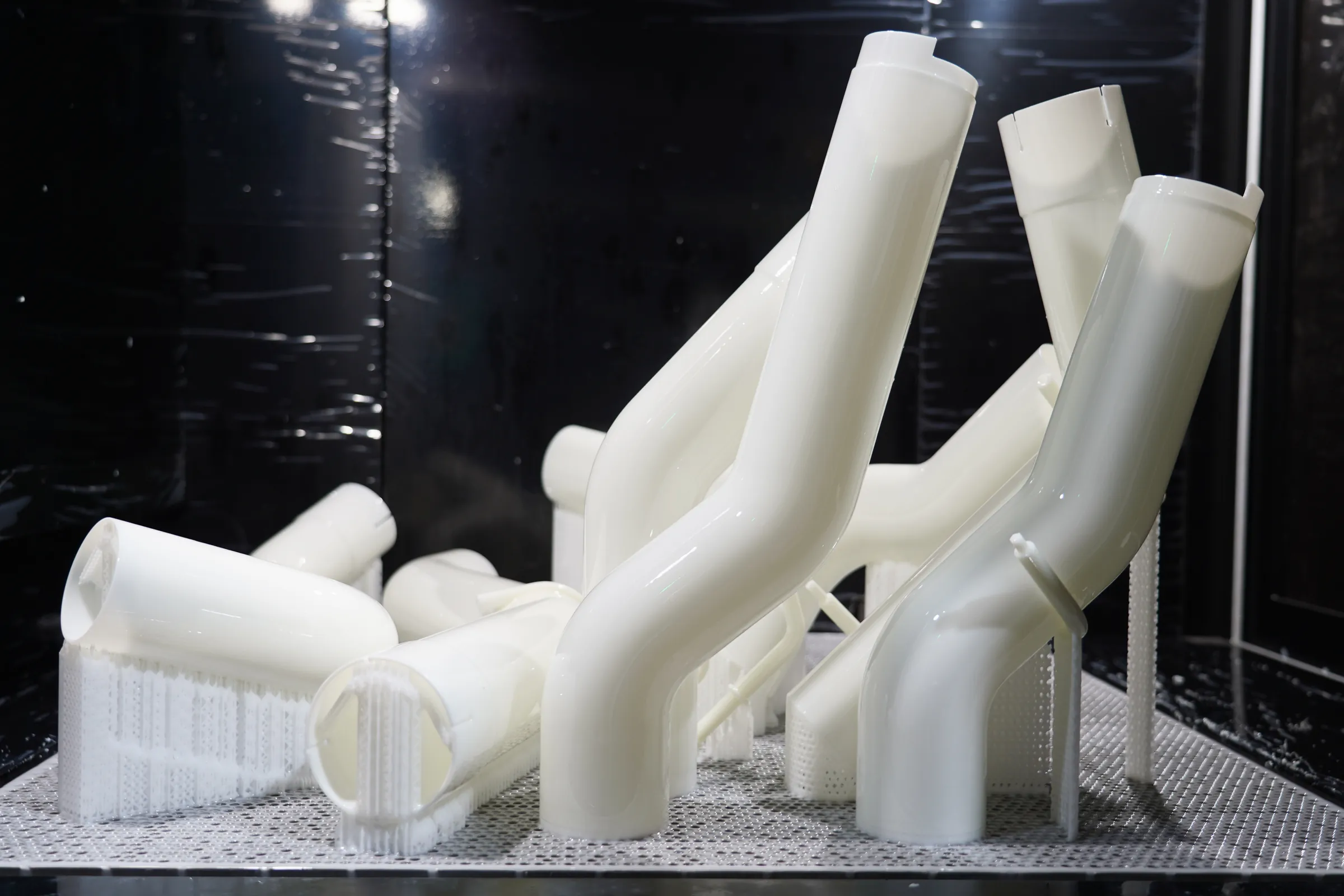
Stereolithography builds a part by curing liquid photopolymer with light, one layer at a time. KM Rapid carries out SLA printing in-house for detailed prototypes, appearance models and master patterns. Share your CAD file, drawing and the purpose of the prototype so resin selection, orientation, support placement and finishing can be reviewed together. Contact us for lead time.
When SLA Fits Your Project
Appearance and Detail
Consider SLA for presentation housings, visual assembly models, fine features and patterns. The resin and finishing route influence color, clarity and the appearance of visible surfaces. Mark cosmetic areas on the drawing.
Review Functional Use
A resin prototype is not automatically equivalent to an injection-molded production part. Review repeated loading, elevated temperature, chemicals and long-term exposure. A functional requirement may favor another printing process or CNC machining.
SLA Capabilities
| Specification | Capability |
|---|---|
| Equipment | In-house SLA printing |
| Materials | Kings3D KS158T, KS408A, KS608A, KS808-BK and KS908C |
| Dimensional tolerance | Assessed from your drawing, geometry, material and finishing requirements |
| Maximum part size | Assessed from your drawing; discuss splitting and assembly where needed |
| Minimum wall and feature size | Assessed from your drawing and the function of the feature |
| Layer setting | Grade-dependent; see supplier layer ranges below. Layer thickness is not dimensional tolerance. |
| Lead time | Contact us for lead time |
| Finishing | Discuss support-mark cleanup, surface preparation, painting or polishing with the quotation |
The quotation sets the manufacturing and inspection requirements for your part. A machine count or resin data sheet does not by itself establish the accuracy of every geometry. Tell us which features control assembly or acceptance.
SLA Materials and Layer Settings
KS158T
Kings3D · SLA photopolymer · Clear
Clear-part concepts, display models and visual assembly reviews.
KS408A
Kings3D · SLA photopolymer · Opaque white
Housings, form models and detailed assembly prototypes.
KS608A
Kings3D · SLA photopolymer · Pale yellow
Form and fit prototypes and detailed concept models.
KS808-BK
Kings3D · SLA photopolymer · Carbon black
Black appearance prototypes and master-pattern development.
KS908C
Kings3D · SLA photopolymer · Brown
Detailed models and master patterns, including footwear and art-model development.
| Grade | Appearance | Supplier layer range (mm) |
|---|---|---|
| KS158T | Clear | 0.10–0.15 |
| KS408A | Opaque white | 0.05–0.15 |
| KS608A | Pale yellow | 0.05–0.15 |
| KS808-BK | Carbon black | 0.05–0.12 |
| KS908C | Brown | 0.10–0.15 |
Layer ranges are taken from the Kings3D material data sheets. They describe a printing setting, not a promise of dimensional accuracy or minimum feature size. The selected build setup is reviewed for the individual model.
See the SLA materials comparison for supplier tensile strength, hardness, HDT and Tg values with their test conditions. Those values describe post-cured test specimens; they do not guarantee finished-part performance.
Design, Orientation and Supports
Identify critical dimensions, mating surfaces and the preferred viewing direction. Orientation affects where supports contact the model and how layer patterns appear. Place important cosmetic and functional faces in the design review so support removal and finishing can be planned around them. Thin walls, slender features, holes and sharp transitions need attention in relation to the complete geometry.
For hollow models, discuss access for draining uncured resin and cleaning internal spaces. A closed cavity or narrow channel may make cleaning and inspection difficult. Avoid assuming that an externally complete shape is suitable for its intended use without reviewing the internal geometry. Split parts can create joints that also need a defined fit and finish.
From CAD File to Prototype
Send the Model and Requirements
Provide CAD, a dimensioned drawing where needed, quantity, material preference and the intended test. Mark the latest revision and any cosmetic faces.
Review the Build
Our team reviews resin, orientation, supports and post-processing. Resolve critical dimensions and acceptance requirements before the order is agreed.
Print and Post-process
The model is printed, cleaned and post-cured for the selected resin. Supports are removed and the agreed surface preparation or finishing is performed.
Inspect and Deliver
Inspection follows the agreed drawing and project requirements. Specify any dimensional record or appearance sample needed for acceptance; the scope depends on the part.
Finishing and Appearance
Surface preparation can reduce visible support marks and prepare a model for painting or other agreed cosmetic work. Clear resin, polishing and wall geometry all influence a clear-part concept. Discuss the appearance you need using a reference or acceptance description; the word “clear” alone does not define an optical specification. Review coatings around mating surfaces and features with a controlled fit.
Explore surface finishing for the available routes, and agree the sequence with the SLA quotation.

Compare SLA with Other Routes
| Route | Typical reason to consider it | Selection question |
|---|---|---|
| SLA | Fine detail and resin appearance models | Can the photopolymer and finishing meet the purpose of the prototype? |
| SLS or MJF (qualified partner factories) | Nylon functional prototypes and assemblies | Does a nylon process better match the required behavior? |
| Vacuum casting | Repeated polyurethane parts from a silicone mold | Do quantity, resin simulation and master-pattern preparation suit the project? |
| CNC machining | Parts made from a specified machinable stock material | Is the actual material grade more important than the benefits of printing? |
Return to the 3D printing overview to compare SLA, SLS, MJF, SLM and FDM. For repeated prototypes, discuss vacuum casting; for a specified stock grade, consider CNC machining.
Frequently Asked Questions
Can’t find your answer? Talk to our engineers.
-
Is SLA layer thickness the same as tolerance?
No. Layer thickness is a build setting. Dimensional tolerance depends on geometry, resin, orientation and post-processing, and is assessed from your drawing.
-
Which SLA resin should I choose?
Start with the intended use, appearance and service conditions. KM Rapid offers KS158T, KS408A, KS608A, KS808-BK and KS908C. Review the grade-specific supplier data and finishing needs with our engineers; an ABS-like resin is not the same material as injection-molded ABS.
-
How long does SLA printing take?
Contact us for lead time. Send the CAD model, quantity, material and finishing requirements so we can review the complete manufacturing route.
Ready to Start Your Project?
Send your model, quantity and the features that matter. Our engineers will review the SLA resin, build setup and finishing.