
Die Casting Services: Aluminum and Zinc Die Cast Parts
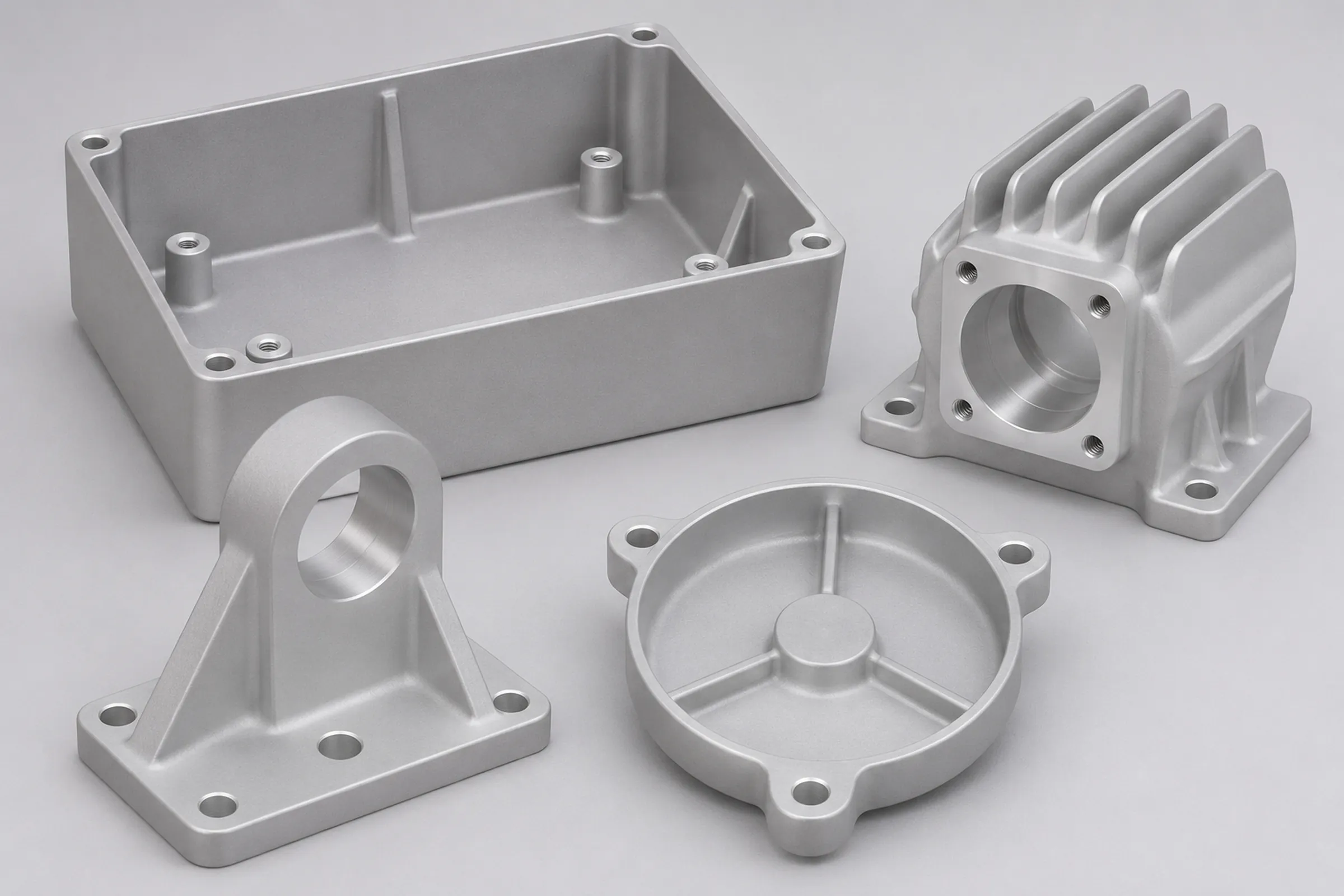
Die casting forms metal parts by forcing molten metal into a reusable steel die. It suits repeat designs with integrated walls, ribs, bosses and other features that would otherwise require extensive machining. Die cast parts are produced with qualified partner factories; KM Rapid handles DFM review, project management, quality inspection and delivery. Casting and any subsequent operations are reviewed within the same project.
Service Capabilities
| Item | Capability |
|---|---|
| Materials | Aluminum alloys (including ADC12) and zinc alloys |
| Maximum part size | Up to 1,000 mm |
| Tolerance | From ±0.05 mm, depending on part size and feature; critical features can be finished by CNC machining |
| Minimum wall thickness | 1.0 mm |
| Minimum order quantity | 2,000 pieces per part (minimum order value applies) |
| Lead time | First samples from 15 days; production from 30 days |
| Finishing | Oxidation / anodizing, sandblasting, powder coating, electroplating and more |
| Inspection | Calipers, height gauge, CMM |
| Tooling ownership | The customer owns the die-casting mold |
| Quality certification | Partner foundry certified to ISO 9001 |
| NDA | Available |
Send the part model and drawing so the casting route and downstream work can be assessed together. The quotation sets out the agreed manufacturing scope. Mark functional surfaces and acceptance requirements rather than assuming that every as-cast feature needs the same treatment.
Material and Surface Requirements
We work with aluminum alloys, including ADC12, and zinc alloys through our partner foundry. These materials have different implications for weight, service conditions and finishing. Specify the required alloy and the function of the part when requesting a quote. A familiar alloy name alone does not establish the mechanical performance, corrosion resistance or appearance of a finished component; the drawing and application guide the review.
When to Choose This Process
Consider die casting when the design is stable and repeated metal parts justify dedicated tooling. Housings, covers and brackets illustrate the kinds of geometry suited to this process. When the design is still changing, a machined prototype can help evaluate interfaces before committing to a casting tool.
How Your Project Moves Forward
Review the part
Share the CAD model, dimensioned drawing, intended use and purchasing quantity. Our DFM review identifies features that affect casting and later machining.
Agree the scope
Resolve material, cosmetic faces, critical interfaces and inspection requirements in the quotation. Tooling arrangements are discussed as part of the project.
Coordinate production
Partner manufacturers produce the castings. KM Rapid follows the project and coordinates drawing revisions and any agreed secondary work.
Inspect and deliver
Our team manages incoming inspection and delivery. The drawing and agreed acceptance criteria guide checks, with reporting requirements discussed before ordering.
Design and Drawing Review
Identify surfaces where parting lines, gates or ejector marks would be unacceptable. Consider wall transitions, release angles and access for removing the part from the die. Features that need machined sealing faces, threads or precise fits should be identified early. Discuss these with the team rather than specifying the entire casting as if it were machined from solid stock.
Machining, Finishing and Delivery
Cast geometry and finishing should be planned together. Define cosmetic faces, masking areas and surfaces that must retain their functional fit. Where the project includes several manufacturing processes, KM Rapid coordinates the handover between casting, machining and finishing so the drawing revision and acceptance requirements stay consistent.
Compare Manufacturing Routes
| Process | When it fits | What to review |
|---|---|---|
| Die casting | Repeated metal components with a stable design | Dedicated tooling and casting features need early review |
| CNC machining | Design changes, prototypes and machined interfaces | Tool access and the amount of stock removal affect the route |
| Sheet metal fabrication | Folded housings, panels and brackets | Bends and joints shape the design rather than a cast cavity |
Explore CNC machining for secondary features and surface finishing.
Frequently Asked Questions
Can’t find your answer? Talk to our engineers.
-
Who owns the die-casting mold?
The customer owns the die-casting mold.
-
What is the minimum order for die casting?
The minimum order is 2,000 pieces per part. A minimum order value applies.
-
How long does die casting take?
The lead time is from 15 days for first samples and from 30 days for production.
Ready to Start Your Project?
Send your CAD model, drawing, material and quantity. Our engineers will review the manufacturing route and quotation.